Choosing shower faucets for global sourcing requires more than comparing catalog prices. Buyers must assess water performance, cartridge durability, material composition, certifications, and after-sales support. Grand View Research estimates that the global bathroom faucets market reached about USD 10.9 billion in 2023. It also projects steady growth through 2030. However, market reports use different product definitions. That weakness deserves attention.
Regional requirements can change the entire sourcing decision. A faucet designed for one water-pressure system may perform poorly elsewhere. Thread sizes, inlet spacing, flow limits, and connection standards also vary. Suppliers should provide test reports, material declarations, factory audit records, and clear warranty terms. Experienced buyers should request samples before approving mass production. A polished showroom finish is not proof of internal reliability.
Water efficiency matters, too. Veronica Blette, former chief of the U.S. EPA WaterSense Branch, said, “WaterSense labeled products use at least 20 percent less water and perform as well or better than standard models.” This guidance is especially relevant when shower faucets include hand showers or integrated flow controls. The World Health Organization and UNICEF reported that billions of people still lack safely managed water services. Responsible sourcing should therefore consider lifetime water use, not only the purchase price. Small details matter. A cheaper faucet can become expensive through leakage, returns, and replacement parts. This introduction examines how to compare suppliers, verify technical claims, manage regional compliance, and build a more dependable global sourcing strategy for shower faucets. No checklist is perfect. Buyer judgment remains essential.
Before contacting suppliers, define the project in measurable terms. Identify target countries, property type, bathroom count, and installation date. Record local water pressure ranges, inlet dimensions, and preferred control styles. A faucet for a hotel may need stronger daily-cycle performance than one for private homes. Clarify whether the project values low cost, long service life, fast delivery, or balance. Trade-offs matter. Set a target unit cost, acceptable defect rate, order volume, and reorder plan. Vague objectives create expensive comparisons.
A practical sourcing brief should specify materials, finish, connection size, cartridge expectations, packaging, and installation instructions. Request samples before approving mass production. Test the handle movement, water flow, leakage resistance, surface finish, and included accessories. Ask suppliers for test reports and conformity documents required in each destination market. Confirm lead times for samples, production, inspection, and replacement parts. Include warranty handling in writing. Small details matter.
My early sourcing plans focused too heavily on purchase price. That was a mistake. A cheaper faucet can create higher costs through returns, site delays, or difficult installation. I now compare landed cost, not quotation price alone. Still, a perfect brief is impossible. Water conditions and contractor preferences can change. Leave room for approved alternatives, but document every change. A clear objective gives suppliers less room to guess.
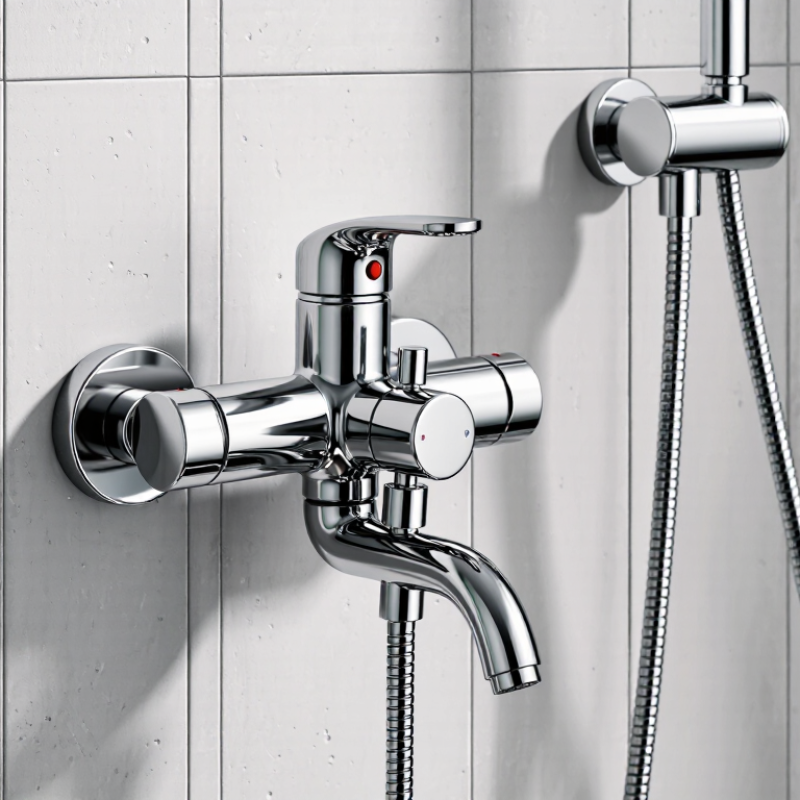
Choosing shower faucets for global sourcing requires more than comparing finishes and catalog prices. Exposed faucets keep the valve body outside the wall, making installation and future repairs easier. Concealed systems create a cleaner appearance but need accurate rough-in measurements before tiling. A small error can force costly wall removal.
Pressure-balancing valves help prevent sudden temperature changes when water pressure shifts. Thermostatic valves offer finer temperature control and suit hotels, apartments, and premium residential projects.
Diverter models direct water between a showerhead, hand shower, or tub outlet. Check the number of outlets carefully. More outlets can also mean more complex maintenance.
Installation systems deserve equal attention. Wall-mounted faucets usually need concealed pipe connections and a compatible rough-in body. Deck-mounted units suit bathtubs or custom platforms, but their hole spacing must match the fixture. Confirm thread sizes, inlet distances, water-pressure ranges, and local plumbing requirements. Independent testing reports and material declarations improve sourcing reliability.
Do not judge quality by weight alone. Internal cartridges, seals, corrosion resistance, and spare-part availability matter more over time. A cheaper faucet may become expensive after repeated service calls. I have seen specifications look complete while omitting drain compatibility and installation depth. That gap needs questioning. Request assembly drawings, test records, packaging details, and clear warranty terms before approving samples. Regional preferences also matter, so one design rarely fits every market.
When I source shower faucets internationally, I check the destination market before comparing prices. Standards differ between countries, and one approval rarely works everywhere. Confirm requirements for potable-water contact, pressure resistance, temperature control, flow rate, and backflow protection. Ask suppliers for complete test reports, not only certificate numbers. The report should name the exact model, materials, factory, and testing date.
Compatibility is just as important as certification. Measure inlet spacing, thread type, pipe size, cartridge dimensions, and wall depth. A faucet can meet a standard and still fail during installation. Metric and imperial threads may look similar, yet they are not always interchangeable. Check hot and cold connections carefully. Also review local plumbing codes and water-efficiency rules before placing a bulk order. Independent laboratory verification adds credibility, especially when documents appear unclear or recently edited.
I once treated a familiar connection size as universal. It caused delays, extra adapters, and a costly site correction. That mistake still influences my inspection checklist. I now request installation drawings, material declarations, warranty terms, and sample testing before mass production. Some suppliers provide excellent paperwork but weak dimensional control. Others make reliable products but explain compliance poorly. Both issues deserve attention. When evidence conflicts, pause the order and seek written clarification from a qualified testing body or local plumbing professional. Be careful with assumptions.
Supplier evaluation should begin with factory evidence, not polished samples. Request recent audit records, material declarations, process maps, and references from comparable export projects. The ISO Survey 2023 recorded 1,265,216 ISO 9001 certificates worldwide, but certification alone proves little. Ask who controls the critical processes.
Inspect incoming brass, cartridge dimensions, plating thickness, and pressure-test records. Test it cold. A practical audit should include random sampling, endurance testing, leak testing, and corrosion checks. The U.S. EPA’s WaterSense specification limits showerheads to 2.0 gallons per minute, so confirm flow performance under different pressures.
Pricing needs a complete cost model. Compare the same metal grade, cartridge type, finish, packaging, inspection level, and warranty terms. A cheaper quotation may hide thinner plating or weaker internal components. It still tempts buyers. That is where judgment can fail.
Require a pre-production sample and an approved control sample before mass production. Keep inspection criteria measurable, such as zero leakage after pressure testing and defined surface-defect limits.
Lead times should reflect capacity, not sales promises. Request a production schedule covering raw materials, machining, finishing, assembly, inspection, and shipping. UNCTAD’s Review of Maritime Transport 2024 highlights how route disruptions can extend maritime journeys and raise costs.
Add realistic buffers for vessel delays and rework. Confirm the supplier’s monthly output and current order queue. A spreadsheet is useful, but it is not proof. Recheck critical dates before payment milestones.
Global shower faucet sourcing needs more than a catalog review. A sample should match the intended market’s water pressure, connection size, finish, and installation method. I usually request two samples from the same production lot. One is installed; the other stays sealed for comparison. Check cartridge movement, handle alignment, thread quality, and surface finish under bright light. Small defects become expensive after container loading. Ask for a sampling record, including material grades and test conditions. Shortcuts here create uncertainty.
Inspection should cover both appearance and function. Test leakage, pressure resistance, temperature control, flow stability, and repeated handle operation. Use documented acceptance limits, not phrases such as “good quality.” Photograph thread gauges, packing layers, and carton labels. An independent inspector can reduce bias, although inspection cannot replace engineering review. I have seen polished samples pass visual checks while unfinished internal edges caused poor sealing. That mistake was avoidable.
Shipping plans need accurate carton dimensions, gross weight, spare-part quantities, and moisture protection. Confirm pallet requirements and shipping marks before booking space. Keep one approved sample with the purchase file. It helps resolve disputes later. After-sales support should include installation diagrams, replacement cartridges, response times, and a claim process. Agree on who pays for verified defects and how evidence is reviewed. Do not promise instant solutions. Some cases require field photos, batch numbers, and a short troubleshooting video. Build that delay into service planning. I would also review the first shipment after arrival, because factory reports cannot reveal every transport problem.
Typical business-day planning windows for sampling, inspection, shipping, and after-sales support.
Use these planning benchmarks to compare suppliers: approve samples before mass production, schedule pre-shipment inspection, reserve sufficient ocean-transit time, and define a fast response process for after-sales issues. Shipping time varies by route, season, and customs conditions.