


2026 Best Shower Plumbing Systems for Global Buyers
Buying a shower system in 2026 involves more than choosing a polished wall plate. Global buyers must examine water pressure, pipe connections, valve quality, maintenance access, and local installation practices.
Richard Trethewey, a respected plumbing and heating expert, has often emphasized, “The best plumbing is the plumbing you don’t see.” That idea still matters. A concealed shower plumbing system may create a clean bathroom, but poor access can turn a small leak into expensive wall damage. Visible systems are easier to inspect, although they may not suit every design.
This guide compares leading shower plumbing systems for international residential and hospitality projects. It considers thermostatic control, pressure balance, corrosion resistance, replacement parts, and compatibility with different water supplies. Stainless steel bodies, ceramic cartridges, and clearly marked temperature limits can improve daily reliability. Some systems also reduce wasted water while preserving a satisfying spray.
Real installation conditions can be messy. A beautiful system may perform poorly with weak pressure, hard water, or incorrect pipe sizing. Product claims also deserve careful checking. Independent certifications, warranty terms, technical drawings, and installer support should influence the final decision.
There is no universal winner.
The most suitable shower plumbing system depends on climate, building structure, budget, and service access. This overview aims to help buyers make informed comparisons, while acknowledging an uncomfortable truth: even excellent hardware can fail when installation details are ignored. Expect practical guidance, realistic limitations, and choices that perform beyond the showroom.
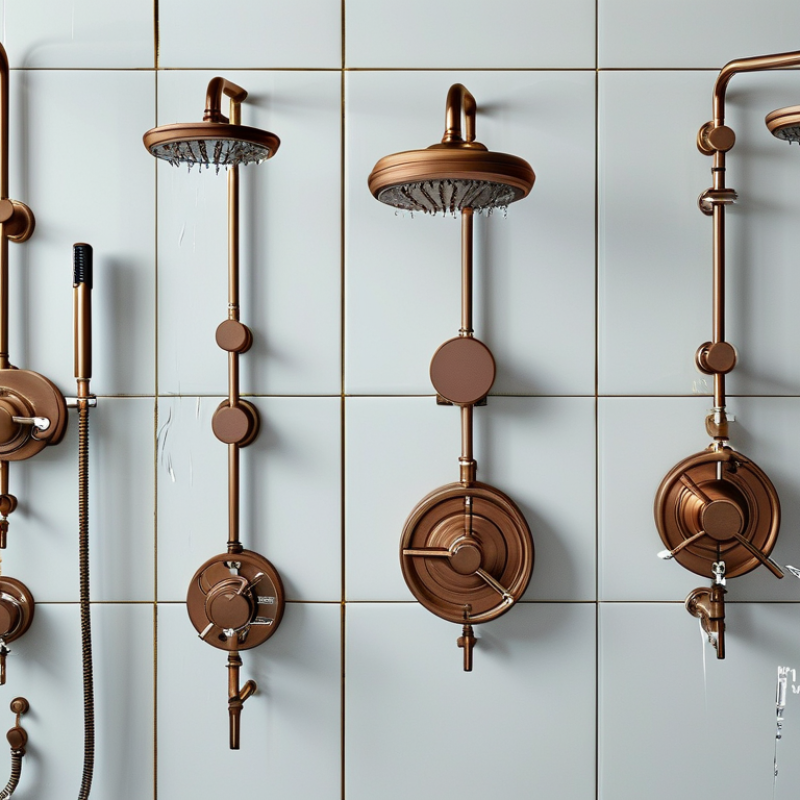
Shower Plumbing System Basics for Global Buyers
Shower plumbing systems begin with water pressure, pipe compatibility, temperature control, and drainage. These basics matter more than decorative fittings. Experienced installers usually measure static and working pressure before selecting valves. A beautiful shower performs poorly when flow collapses during peak use. Check thread standards carefully. BSP and NPT connections are not interchangeable without the correct adapter. Also verify local backflow, scald protection, and accessibility requirements.
The U.S. EPA WaterSense Specification for showerheads limits flow to 2.0 gallons per minute, or 7.6 liters per minute, under defined test conditions. This benchmark helps buyers compare efficiency, but it is not a universal legal limit. The 2023 WHO/UNICEF Joint Monitoring Programme reported that 2.2 billion people lacked safely managed drinking water services in 2022. That figure reminds global buyers to consider filtration, sediment, and maintenance, especially where supply quality changes seasonally. Cartridge protection and cleanable screens can prevent uneven spray patterns.
Think beyond the showerhead. A complete system includes the supply lines, mixer or thermostatic valve, diverter, riser, hand shower, waste trap, and service access. Thermostatic control can improve temperature stability, yet it still needs correct commissioning. Drain capacity also deserves attention. A high-flow rain shower may overwhelm a narrow waste outlet. In practice, specifications are sometimes incomplete. Buyers should request pressure ranges, tested flow rates, connection drawings, spare-part availability, and cleaning instructions. Installation errors remain common, particularly when wall depth is estimated rather than measured.
2026 Best Shower Plumbing Systems for Global Buyers - Shower Plumbing System Basics for Global Buyers
| Shower System Type | Best Use Case | Typical Inlet Pressure | Typical Flow Range | Temperature Control | Main Installation Requirements | Water and Energy Considerations | Maintenance Level | Global Buyer Considerations |
|---|---|---|---|---|---|---|---|---|
| Single-Lever Mechanical Mixer | Standard residential bathrooms with one hot-water and one cold-water supply | 0.5–5 bar (7–72.5 psi) |
6–12 L/min (1.6–3.2 gal/min) |
Manual temperature and flow adjustment through one handle | Two water inlets, suitable wall connections, shower hose or fixed outlet, and adequate hot-water capacity | Flow depends mainly on water pressure and showerhead design; an efficient showerhead can reduce consumption | Low | Confirm hot and cold inlet orientation, connection size, thread type, and compatibility with local plumbing layouts |
| Dual-Handle Mixer | Traditional bathrooms, renovation projects, and installations requiring separate hot and cold controls | 0.5–5 bar (7–72.5 psi) |
6–14 L/min (1.6–3.7 gal/min) |
Separate hot and cold adjustment; temperature may change when pressure fluctuates | Separate hot and cold connections, two control valves, and a suitable shower outlet | Simple mechanical design; water use depends on user adjustment and outlet flow restrictors | Low | Useful where local installers are familiar with traditional two-handle plumbing systems |
| Pressure-Balancing Valve System | Homes where sudden changes in hot or cold water pressure may affect shower temperature | 1–5 bar (14.5–72.5 psi) |
7–15 L/min (1.8–4.0 gal/min) |
Automatically responds to changes in hot and cold water pressure; maximum temperature limit should be adjusted during installation | Correctly sized valve body, hot and cold supplies, access for servicing, and a compatible trim set | Improves temperature stability but does not compensate for a large difference in supply temperature | Low to medium | Check local requirements for anti-scald protection and verify replacement cartridge availability before purchase |
| Thermostatic Shower Valve System | Family bathrooms, hotels, healthcare facilities, and users seeking precise temperature control | 1–5 bar (14.5–72.5 psi) |
8–16 L/min (2.1–4.2 gal/min) |
Maintains a selected temperature by automatically regulating hot and cold water; commonly includes a safety stop | Balanced hot and cold supplies are recommended; hot-water storage or generation must provide sufficient capacity | Can reduce temperature adjustment time and water waste; actual savings depend on user behavior and system design | Medium | Confirm compatibility with local water temperatures, minimum pressure, cartridge standards, and service access |
| Exposed Bar Mixer | Fast bathroom upgrades, apartment renovations, and locations where concealed wall work is undesirable | 0.5–5 bar (7–72.5 psi) |
6–15 L/min (1.6–4.0 gal/min) |
Single-lever or thermostatic control, depending on configuration | Usually connects to two wall outlets; adjustable connector spacing may be needed for existing pipework | Easy access for cleaning and servicing; flow restrictors can help reduce water consumption | Low | Check wall outlet spacing, connector thread, projection from the wall, and clearance around the mixer body |
| Concealed Shower Valve System | Modern bathrooms with a clean wall appearance and separate overhead or hand-shower outlets | 1–5 bar (14.5–72.5 psi) |
8–18 L/min (2.1–4.8 gal/min) |
Mechanical, pressure-balancing, or thermostatic control depending on the selected valve | In-wall valve body, correctly calculated wall depth, service access, waterproofing, and accurately positioned outlets | Performance depends on pipe sizing, outlet count, and simultaneous use of multiple shower functions | Medium to high | Provide installation drawings and verify rough-in depth, replacement trim availability, and regional connection standards |
| Multi-Outlet Diverter System | Shower installations combining an overhead shower, hand shower, body sprays, or multiple outlets | 1.5–5 bar (21.8–72.5 psi) |
12–30 L/min total (3.2–7.9 gal/min) |
Separate temperature control and diverter selection; simultaneous operation depends on valve design | Larger supply pipes may be required; each outlet needs suitable flow capacity, isolation, and drainage planning | Uses substantially more water when several outlets operate together; flow control and staged use improve efficiency | Medium to high | Check hot-water generation capacity, pump requirements, pipe diameter, local drainage capacity, and electrical safety where applicable |
| Digital or Electronic Shower System | Premium residential projects, accessible bathrooms, and installations requiring preset temperature or remote controls | Usually 1–5 bar (14.5–72.5 psi) |
8–20 L/min (2.1–5.3 gal/min) |
Electronic temperature regulation with digital display, memory settings, or remote operation | Water connections plus a suitable electrical supply or battery system; installation must protect electrical components from water | Programmable shutoff and temperature presets may reduce waste; standby energy use varies by system design | Medium to high | Verify voltage and frequency, ingress protection, local electrical codes, spare-part support, and compatibility with regional water systems |
| Low-Pressure Pump-Assisted System | Homes supplied by gravity-fed storage tanks or buildings with insufficient pressure for a comfortable shower | Approx. 0.1–1.0 bar before boosting (1.5–14.5 psi) |
6–14 L/min (1.6–3.7 gal/min) |
Mechanical or thermostatic control, depending on the mixer and pump arrangement | Correctly selected pump, compatible hot-water and cold-water supplies, non-return protection, ventilation, and electrical safety measures | Improves flow but adds electrical consumption and may increase noise; pump sizing should match the number of outlets | Medium | Confirm pump compatibility with the water-heating system, local voltage, pipe arrangement, noise limits, and installer qualifications |
Reference note: Flow rates and pressure ranges are typical planning values for residential shower plumbing and vary by valve, showerhead, pipe size, water temperature, and local regulations. Always verify the installation instructions, potable-water requirements, anti-scald provisions, electrical rules, and connection standards applicable to the destination market.
Related Posts
-
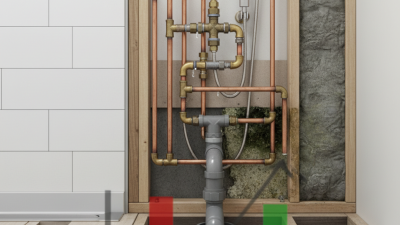
Why Is Shower Plumbing Important for Your Home's Water System?
-

Top Bathroom Fixtures Trends to Watch in 2026?
-

Top 10 Bathroom Supplies You Need for Your Global Sourcing?
-
Why Choosing the Right Lavatory Faucet Can Transform Your Bathroom Experience
-
What is a Basin Faucet and How Does It Work?
-

How to Find More Plumbing Tips for Your Home Maintenance Needs?