China Top Wet Rooms Manufacturers for Global Buyers is a practical guide for importers, developers, and bathroom distributors. It explores how experienced manufacturers design, produce, test, and export modern wet rooms for different markets. These suppliers may offer shower pods, waterproof wall systems, trays, glass enclosures, drainage sets, and accessible bathroom solutions.
Choosing a factory requires more than comparing prices. Buyers should review technical drawings, material specifications, production samples, and quality records. Pay close attention to waterproofing details, drainage slopes, glass thickness, sealant performance, and packaging strength. A factory visit can reveal important facts. Workers, storage conditions, inspection procedures, and assembly lines often tell a clearer story than a polished catalog.
Details matter.
Reliable manufacturers should explain their production capacity, lead times, customization process, and after-sales support. They should also provide relevant test reports and documentation for the destination market. However, no supplier is perfect. Small specification changes can affect installation, shipping costs, or local approval requirements. Buyers should confirm every detail in writing before placing an order.
This overview uses practical sourcing criteria rather than promotional claims. It considers communication quality, manufacturing experience, component consistency, and export performance. It also encourages buyers to compare several Chinese manufacturers carefully. The best partnership is not always the cheapest option. It is the one that delivers safe, durable, well-documented wet rooms with fewer surprises after arrival.
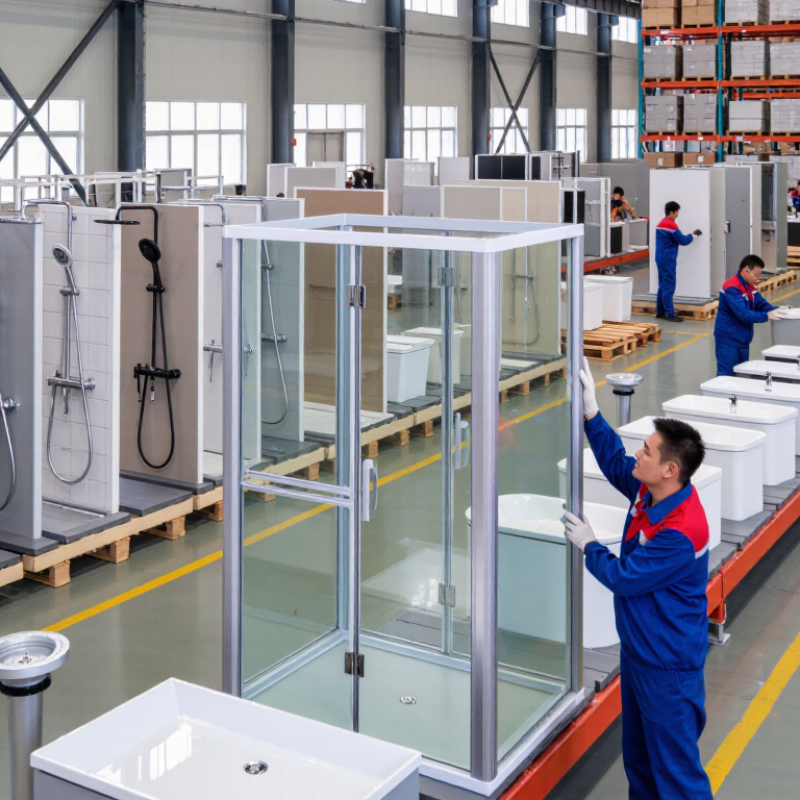
A wet room manufacturer is more than a seller of shower trays and drains. It engineers a complete water-management system. This includes waterproof membranes, floor gradients, drainage channels, wall panels, and installation guidance. In practice, every junction matters. A two-millimetre gap can create a costly failure.
Reliable Chinese manufacturers usually control several processes in one facility. They test waterproof layers, inspect drain connections, and maintain batch records for key materials. Export experience also matters. Products may need to meet standards such as EN, CE, or local building requirements, depending on the destination. Independent laboratory reports are useful, but factory-level quality records reveal more. Ask for test methods, sample conditions, and corrective-action records.
Hygiene and resource efficiency are becoming stronger buying factors. The WHO and UNICEF Joint Monitoring Programme reported that 3.5 billion people lacked safely managed sanitation in 2022. A well-designed wet room can support easier cleaning and safer water control.
The UNEP 2024 Global Status Report states that buildings consume about 32% of global energy and produce 34% of global carbon emissions. Material durability therefore deserves attention, not just appearance.
The awkward truth is that no supplier gets every detail right. A polished showroom can hide weak installation advice. Global buyers should inspect production lines, review failure cases, and test complete assemblies. Not isolated parts.
China’s wet room manufacturing industry is organized as a connected supply network, not a single factory model. Specialized producers often handle shower panels, waterproof trays, glass doors, drainage systems, and bathroom hardware separately. Assembly companies then combine these parts into complete wet room solutions for overseas buyers. This structure improves flexibility and production speed. It can also create coordination problems.
In supplier audits, buyers should examine how each factory manages design, sourcing, testing, and final packing. A capable manufacturer usually maintains drawings, material records, water-resistance tests, and inspection reports.
Some factories focus on OEM production, while others offer ODM support with layout changes, finishes, and installation details. Export teams often coordinate shipping documents and container loading.
Small details matter. A poorly protected glass corner can damage an entire shipment. The industry is efficient, but quality control is not equally strong everywhere.
Tips: Ask who makes each major component. Request sample testing before mass production. Confirm tolerances, drainage performance, packaging methods, and replacement procedures in writing. Visit the production site when possible, or use an independent inspection service. Do not judge a supplier by a polished showroom alone. That lesson is easy to learn late. Also, allow time for design revisions, because the first drawing is rarely perfect.
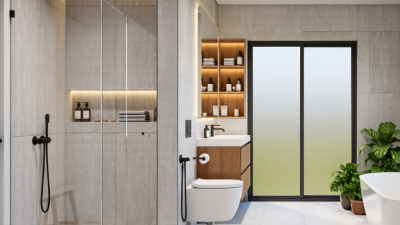
China’s wet room manufacturers offer more than basic shower enclosures. Their product ranges often include waterproof wall panels, shower trays, linear drains, tempered glass doors, vanities, and compact bathroom pods. Many factories also produce prefabricated wet room units for hotels, apartments, hospitals, and modular buildings. These systems can reduce installation time on busy construction sites.
Manufacturers increasingly use factory-applied waterproof membranes, sloped flooring, and sealed joint systems. Some provide anti-slip surfaces, corrosion-resistant fittings, and low-noise drainage designs. Digital controls may manage temperature, lighting, ventilation, and water flow.
Quality-focused suppliers usually support sample testing, load checks, water leakage inspections, and customization for different building layouts. Certification documents matter, but buyers should verify current test results independently. No factory is perfect. Clear communication still prevents costly mistakes.
Tips:
Request a complete material list before ordering. Check the tray slope with a real water test. Confirm glass thickness and hardware grades. Ask for installation drawings with drainage points marked. A small sample room can reveal uneven seals, awkward access, or poor maintenance design before mass production. Beware of attractive finishes that scratch easily. Practical durability should guide the final choice.
China Top Wet Rooms Manufacturers for Global Buyers
How Global Buyers Should Evaluate Chinese Wet Room Suppliers
A credible supplier should prove performance, not only present attractive showroom photos. Grand View Research’s 2023 Bathroom Fixtures Market report forecasts steady growth through 2030. That growth increases pressure on quality control. Ask for batch records, waterproofing test results, installation drawings, and spare-part lists. Request samples from normal production, not specially prepared units. Small details matter. Check drain alignment, slope accuracy, seal thickness, and panel tolerances.
Technical compliance needs independent evidence. Confirm whether waterproofing materials meet EN 14891 or relevant local requirements. Drainage components should match applicable EN 1253 provisions. Laboratory reports must show the exact product model and test date. A certificate with no traceable sample is weak evidence. Factory audits should review curing areas, leak testing, packaging, and corrective-action records. ISO 9001 certification supports process control, but it does not guarantee every shipment.
Commercial checks are equally important. Mordor Intelligence’s bathroom products analysis projects market growth above five percent annually in the coming years. Buyers should therefore examine capacity before placing large orders. Compare monthly output, lead times, container loading photos, and defect records. Ask for three recent export references, while protecting confidential information. I would also test communication during a minor specification change. Delays there often reveal future problems. My own review would not rely on one audit; factory conditions can change quickly, and that assumption deserves challenge.
| Evaluation Dimension | What Global Buyers Should Check | Evidence to Request | Practical Benchmark or Decision Rule | Suggested Weight |
|---|---|---|---|---|
| Legal and Export Readiness | Confirm that the supplier is legally registered, can issue export documentation, and has experience handling international shipments. | Business registration documents, export records with sensitive information redacted, commercial invoice sample, packing-list sample, and customs classification information. | Pass Documentation is consistent, current, and matches the contracting entity and bank-account details. | 8% |
| Product Compliance | Check compliance with the destination market’s building, plumbing, electrical, fire, and accessibility requirements. | Product-specific test reports, declarations of performance where applicable, material declarations, installation instructions, and reports issued by recognized laboratories. | Pass Reports identify the exact model, materials, test method, laboratory, test date, and applicable market requirements. | 15% |
| Waterproofing Performance | Evaluate the complete wet-room system, including wall joints, floor transitions, penetrations, seals, shower areas, and drainage connections. | Waterproofing system specification, joint-detail drawings, installation method statement, batch traceability, and documented water-retention or leak-testing records. | Use a project-specific acceptance test; a documented 24-hour water-retention test is commonly used when permitted by the project specification and local code. | 15% |
| Drainage and Floor Falls | Verify that the floor design supports reliable drainage without ponding and is compatible with the selected drain and pipework. | Floor-fall drawings, drain capacity data, outlet dimensions, connection details, and installation tolerances. | For preliminary comparison, a designed fall of approximately 1:80 to 1:100 is commonly considered; the final value must follow local code and project requirements. | 10% |
| Dimensional Accuracy | Assess whether factory-finished panels, frames, doors, drains, and service openings can be installed consistently on site. | Quality-control plan, inspection records, calibrated measuring-equipment certificates, approved drawings, and sample inspection reports. | Specify tolerances contractually. For visible factory-finished interfaces, buyers often request a defined tolerance such as ±2 mm, subject to the product design and installation method. | 10% |
| Materials and Durability | Review resistance to moisture, corrosion, cleaning chemicals, impact, temperature variation, and repeated use. | Material grades, coating specifications, technical data sheets, accelerated-aging or corrosion-test reports where relevant, and maintenance instructions. | All exposed metal, sealants, boards, finishes, and hardware should be identified by material grade or performance specification rather than by a generic description. | 10% |
| Quality-Control System | Check incoming-material inspection, in-process controls, final inspection, nonconformance handling, and corrective-action procedures. | Quality manual, inspection and test plan, sample checklists, nonconformance reports, corrective-action records, and calibration records. | Use a written sampling plan such as ISO 2859-1 where suitable, and define critical defects, major defects, and minor defects in the purchase contract. | 12% |
| Prototype and Sample Approval | Determine whether the supplier can produce a full-scale prototype before mass production. | Prototype schedule, approved sample sign-off form, material-board sample, color sample, interface drawings, and revision-control procedure. | Required Mass production should not begin until the buyer has approved the prototype, drawings, finish, hardware, and installation details in writing. | 8% |
| Production Capacity and Lead Time | Evaluate production planning, subcontractor dependency, peak-season capacity, and the supplier’s ability to meet the project schedule. | Capacity statement, production schedule, material lead-time list, staffing plan, and documented schedule for prototype and batch production. | Use a project-specific schedule. A common planning allowance is 2–4 weeks for prototype development and 4–8 weeks for production after final approval, excluding shipping and customs clearance. | 8% |
| Packaging and Logistics | Confirm protection against moisture, impact, abrasion, deformation, and missing components during container transport and site handling. | Packaging drawings, palletization plan, carton markings, moisture-control method, loading photos, spare-parts list, and damage-claim procedure. | Packaging should be tested or reviewed for the actual transport route, container loading pattern, lifting equipment, storage conditions, and maximum package weight permitted on site. | 6% |
| Installation Support | Assess whether the supplier provides clear installation guidance and technical support for local contractors. | Installation manual, method statement, BIM or CAD files where required, training plan, troubleshooting guide, and response-time commitment. | Preferred Instructions should include sequencing, substrate requirements, sealing details, drain connections, tolerances, testing, and handover requirements. | 4% |
| Warranty and After-Sales Service | Review coverage, exclusions, claim procedures, spare-parts availability, and responsibility for defective or damaged components. | Signed warranty terms, replacement-part price list, service contacts, claim form, response-time commitment, and examples of corrective-action reports. | Seek a written commercial warranty of approximately 2–5 years where appropriate, with separate terms for consumables, sealants, finishes, hardware, and structural components. | 4% |
| Recommended Evaluation Method: Score each dimension from 1 to 5, multiply the score by the suggested weight, and require documentary evidence for every critical item. Do not approve a supplier solely on price; waterproofing, compliance, dimensional control, and after-sales capability should be treated as non-negotiable risk controls. | 100% | |||
Export quality begins before production. International buyers should request a factory audit, material traceability, and batch-level inspection records. Waterproofing systems need evidence against relevant standards, such as EN 14891, while electrical components may require market-specific safety approvals. CE marking is not a universal passport. The United States, United Kingdom, and Gulf markets apply different documentation rules.
Compliance also includes packaging, chemical declarations, installation instructions, and after-sales responsibilities. The ISO Survey 2023 recorded more than one million ISO 9001 certificates worldwide, but certification alone proves little about a wet room’s site performance. Ask for test reports from accredited laboratories, not only internal inspection sheets. Check sealant batches, drain slopes, glass thickness, and carton protection. Small details create expensive failures.
Sustainability is becoming harder to ignore. The 2023 Global Status Report for Buildings and Construction, published by UNEP and GlobalABC, reported that buildings consumed about 34% of global energy and produced around 37% of energy and process-related emissions. Buyers should therefore examine recycled content, product durability, repair options, and shipping efficiency. A lighter package may reduce freight emissions, yet weaker protection can increase breakage. No supplier is flawless. My own experience suggests that the best decision often comes from comparing uncomfortable evidence, including failed tests, complaint records, and corrective-action reports.