Top 10 Bathroom Plumbing Products for Global Buyers
Bathroom plumbing is no longer judged only by appearance. Global buyers now examine water efficiency, durability, installation access, and after-sales support. WHO and UNICEF’s Joint Monitoring Programme reported that 2.2 billion people lacked safely managed drinking water in 2022. The same report found that 3.5 billion people lacked safely managed sanitation. These figures make reliable bathroom infrastructure more than a design preference. It is a practical requirement.
This guide reviews ten bathroom plumbing products for international purchasing teams, distributors, contractors, and property developers. The selection considers faucets, shower systems, toilets, bidet fixtures, drains, valves, flexible connectors, and leak-control devices. EPA WaterSense notes that household leaks can waste nearly 10,000 gallons of water annually in the United States. Small failures matter. A dripping cartridge, weak seal, or poorly matched connector can create recurring costs and customer complaints. Product specifications, test certificates, replacement parts, and installation instructions therefore deserve equal attention.
Regional conditions still change the decision. A water-saving toilet may perform differently under low pressure. Brass composition, coating quality, thread standards, and local building codes also require careful checking. International buyers should verify certifications before ordering large quantities. Standards are not perfectly uniform. That is an honest limitation. No ranking can suit every project, climate, or plumbing network. However, combining manufacturer evidence with recognized reports, field experience, and transparent warranty terms can reduce avoidable risk. The products below focus on dependable performance, practical maintenance, and measurable value across diverse bathroom markets.
How Global Standards Define the Top 10 Bathroom Plumbing Products
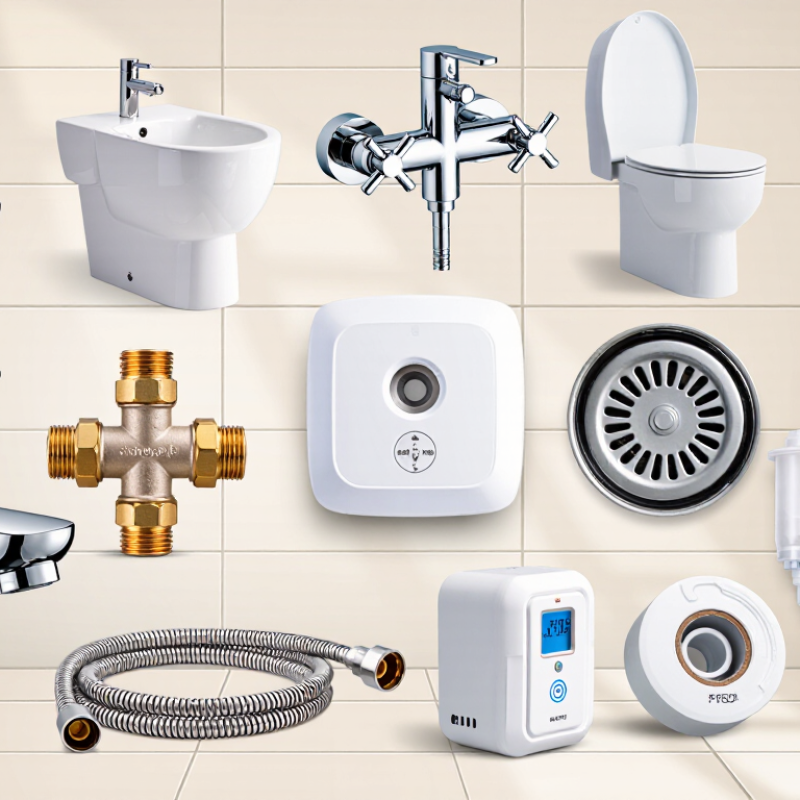
Global standards, not glossy design, define the top 10 bathroom plumbing products: water-saving toilets, dual-flush valves, basin faucets, shower valves, handheld showers, floor drains, P-traps, angle valves, flexible connectors, and leak detectors. Each product must match local pressure, thread, temperature, and drainage requirements. Materials also need documented resistance to corrosion and potable-water contamination.
The WHO and UNICEF Joint Monitoring Programme reported that 3.5 billion people lacked safely managed sanitation in 2022. This figure raises the value of durable, repairable plumbing. A dual-flush toilet should deliver reliable flushing with lower water use. A floor drain needs a dependable trap seal and enough flow capacity. Flexible connectors require pressure testing and clear service-life information. Standards such as ISO, EN, ASME, and local code systems help verify these details, but compliance marks are not everything. Installation quality still decides performance.
Tips: Check certification scope, not only the logo. Confirm pipe size and pressure before ordering. Request test reports for valves, connectors, and faucets. Keep spare seals available. Small parts fail first.
In practice, global buyers should compare flow rates, burst pressure, noise, spare-part access, and cleaning requirements. A leak detector may protect a cabinet, yet it cannot replace correct joint assembly. I would also question products claiming universal compatibility. Bathroom systems differ widely. A perfect specification can still fail beside a poorly aligned drain. Standards guide selection, but site conditions deserve equal attention.
Faucets and Showerheads: Use 1.5-gpm and 2.0-gpm WaterSense Benchmarks
For global buyers comparing bathroom plumbing products, flow rate is a practical starting point. The U.S. EPA WaterSense specifications set a maximum of 1.5 gallons per minute (gpm) for bathroom faucets and 2.0 gpm for showerheads. The test conditions differ: faucets are rated at 60 psi, while showerheads are rated at 80 psi. Check both the flow rating and local water-pressure conditions before specifying fixtures.
The EPA estimates that WaterSense-labeled showerheads can save an average family 2,700 gallons of water and 330 kilowatt-hours of electricity annually, compared with standard models. Labeled bathroom faucets can save about 700 gallons per household each year. These are estimates, not guarantees. Household size, shower length, and existing fixtures change the result.
The numbers are useful, not perfect. A low-flow showerhead may feel weak in a building with poor pressure, especially on an upper floor. Ask suppliers for test documentation, consistent flow-rate labeling, and replacement-part availability. A short shower test helps, too. Buyers serving multiple markets should treat WaterSense as a useful benchmark, then check local requirements and user expectations before ordering.
Top 10 Bathroom Plumbing Products for Global Buyers - Faucets and Showerheads: Use 1.5-gpm and 2.0-gpm WaterSense Benchmarks
A practical comparison of common bathroom faucet and showerhead formats. Flow figures below are U.S. WaterSense benchmark ceilings for the relevant product category, shown with approximate metric conversions; they are not claims that any particular product is certified.
| # |
Product type |
Typical installation or use |
WaterSense benchmark maximum flow |
Key checks for global buyers |
| 1 |
Single-hole bathroom faucet |
One deck opening; commonly combines the spout and handle in one assembly. |
1.5 gpm (5.7 L/min) |
Confirm mounting-hole size, deck thickness, basin clearance, and local supply-hose connections. |
| 2 |
Centerset bathroom faucet |
Typically fits a three-hole basin or countertop with closely spaced holes; handles and spout form one unit. |
1.5 gpm (5.7 L/min) |
Check the basin’s hole spacing and the faucet’s required number of mounting holes. |
| 3 |
Widespread bathroom faucet |
Separate spout and handles allow flexible spacing on a multi-hole vanity top. |
1.5 gpm (5.7 L/min) |
Verify the permitted handle-to-spout spacing, countertop thickness, and available installation space. |
| 4 |
Wall-mounted bathroom faucet |
Installed through the wall above a basin; the water outlets and rough-in are concealed. |
1.5 gpm (5.7 L/min) |
Confirm wall rough-in dimensions, spout reach, basin position, and access for servicing concealed parts. |
| 5 |
Vessel-basin faucet |
Taller deck-mounted or wall-mounted design for use with an above-counter vessel basin. |
1.5 gpm (5.7 L/min) |
Check spout height and reach against the basin to help limit splashing; confirm mounting compatibility. |
| 6 |
Fixed showerhead |
Stationary head attached to a shower arm; available in different spray patterns. |
2.0 gpm (7.6 L/min) |
Check the shower-arm connection, local water pressure, spray performance, and applicable regional requirements. |
| 7 |
Handheld showerhead |
Removable spray head connected by a flexible hose and held in a bracket or slide bar. |
2.0 gpm (7.6 L/min) |
Review hose length, bracket or slide-bar mounting, connection compatibility, and whether the flow figure applies to the complete assembly. |
| 8 |
Fixed-and-handheld shower combination |
Combines a fixed shower outlet with a detachable hand shower; configurations vary by design. |
2.0 gpm (7.6 L/min) |
Check how the diverter operates and verify the rated flow for the operating mode or modes specified for the product. |
| 9 |
Rain-style showerhead |
Large fixed head, often ceiling-mounted or installed on an extended shower arm. |
2.0 gpm (7.6 L/min) |
Confirm mounting type, ceiling or arm clearance, and performance at the water pressure available at the installation site. |
| 10 |
Multi-spray showerhead |
Fixed or handheld model with selectable spray settings. |
2.0 gpm (7.6 L/min) |
Ask for flow information for each relevant setting and check local plumbing rules and user-preferred spray performance. |
Important: WaterSense is a U.S. voluntary labeling program, not a universal global plumbing standard. Its benchmark maximum is 1.5 gpm for labeled bathroom sink faucets and 2.0 gpm for labeled showerheads. A flow rate at or below a benchmark alone does not establish WaterSense certification; buyers should verify current certification requirements and confirm local codes, pressure conditions, connection standards, and product documentation for the destination market.
Valves, Traps, Drains, and Supply Lines: Assess Materials, Sizing, and Codes
Global buyers should compare bathroom plumbing products by material, dimensions, and documented suitability—not appearance alone. For valves, check the connection type, pressure rating, and temperature range. Brass and corrosion-resistant polymers serve different systems, so verify compatibility with local water conditions. Confirm that wetted materials meet the destination market’s potable-water requirements. A valve that fits the pipe may still be unsuitable. Small details matter.
For traps, match the outlet size and configuration to the basin and waste pipe. A poorly aligned trap can strain joints or leave stagnant water. Choose drains by outlet diameter, floor thickness, and expected flow; tile and waterproofing layers affect the fit. Supply lines need correct length, end connections, and pressure ratings. Measure the installed route, not just the straight-line distance. Codes and accepted test methods vary by location, so request current product documentation and confirm requirements with a qualified local plumbing professional. Paperwork can be easy to overlook.
Tips: Check dimensions against drawings before ordering. Inspect threads and seals on arrival. Keep a sample fitting nearby when comparing connections. If a specification is unclear, pause and verify it; guessing can turn a small mismatch into a costly installation delay.
Top 10 Bathroom Plumbing Products for Global Buyers
Valves, traps, drains, and supply lines assessed by common nominal connection or opening size.
The chart uses commonly specified North American nominal sizes: 1 inch = 25.4 mm. Actual product sizes, thread types, materials, and installation requirements vary by country and application. Buyers should verify local plumbing codes and project specifications before ordering.
How Buyers Compare the Top 10: Efficiency, Certification, Durability, and Cost
Global buyers compare bathroom plumbing products through four practical filters: water use, certification, service life, and total cost. EPA WaterSense criteria provide a useful benchmark. Labeled toilets use no more than 1.28 gallons per flush, at least 20% less than standard models. Labeled bathroom faucets use no more than 1.5 gallons per minute, compared with the common 2.2-gallon standard. Small numbers matter. A leaking valve can quietly waste water every night.
Certification reduces uncertainty across borders. Buyers should check conformity with applicable standards, such as NSF/ANSI 61 for materials contacting drinking water and ASME A112.18.1/CSA B125.1 for plumbing supply fittings. Requirements vary by market, so one certificate rarely covers every destination. The comparison is not perfect. Some suppliers present laboratory results without explaining test conditions, temperature, pressure, or sample size. Ask for current documents, traceable test reports, and replacement-part availability.
Durability needs more than a polished finish. Examine cartridge construction, connection threads, corrosion resistance, and the supplier’s repair process. A longer warranty helps, but it is not proof of longer life. Cost should include purchase price, installation, water consumption, freight, and maintenance. EPA WaterSense program data reported more than 7.5 trillion gallons of water saved through 2023, showing the financial scale of efficiency. Yet savings depend on local tariffs and household use. A cheaper product may lose its advantage after one failed cartridge. That deserves closer review.