2026 Best Plumbing Accessories for Global Buyers

Global buyers choosing plumbing accessories in 2026 face a practical challenge: products must perform reliably across different buildings, water conditions, and supply chains. A polished finish matters, but so do cartridge life, replacement-part availability, installation dimensions, and clear product documentation. Small parts matter.

Industry data adds useful context, though it does not predict accessory sales. The United Nations Environment Programme’s 2023 Global Status Report for Buildings and Construction estimated that buildings and construction accounted for 34% of global energy demand and 37% of energy- and process-related carbon dioxide emissions in 2022. Water efficiency is another purchasing consideration. The U.S. Environmental Protection Agency reports that WaterSense-labeled bathroom faucets use no more than 1.5 gallons per minute, at least 30% less than the federal standard of 2.2 gallons per minute. That benchmark is specific to the United States, not a universal specification.

For international sourcing, compare flow rates, materials, pressure limits, warranty terms, and locally accepted certifications before placing an order. Ask suppliers for test documentation and confirm that replacement cartridges or seals can be obtained later. These checks can reduce avoidable maintenance, especially in hotels, apartment projects, and commercial washrooms. Yet no checklist removes every risk. Product claims and test methods can differ, and a low purchase price may hide service costs. The guide below highlights plumbing accessories worth evaluating, while treating performance, compatibility, and dependable after-sales support as purchasing essentials.
2026 Best Plumbing Accessories for Global Buyers

Understanding Plumbing Accessories and Their Role in 2026

Understanding Plumbing Accessories and Their Role in 2026

Plumbing accessories are the working details behind a reliable water system: valves, connectors, aerators, traps, drains, and shower fittings. They control flow, help prevent leaks, and make maintenance easier. Small parts matter. A poorly matched connector can turn a new installation into a slow drip beneath a cabinet.

The need for dependable water systems remains substantial. The WHO and UNICEF Joint Monitoring Programme reported that 2.2 billion people lacked safely managed drinking water services in 2022. Accessories cannot solve access gaps alone, but well-designed components can reduce waste and support safer, more consistent use where plumbing exists. For global buyers, check material compatibility, replacement-part availability, pressure range, and clear installation specifications.

Water efficiency is another practical consideration. The U.S. EPA WaterSense program says certified bathroom sink faucets and accessories use no more than 1.5 gallons per minute, at least 30% less than the federal standard flow rate. This is a U.S. benchmark, not a universal requirement. Low flow alone is not enough; local pressure and user expectations matter too. A fitting that saves water on paper may disappoint in a low-pressure building, and that detail deserves a closer look.

Key Types of Plumbing Accessories for Global Markets

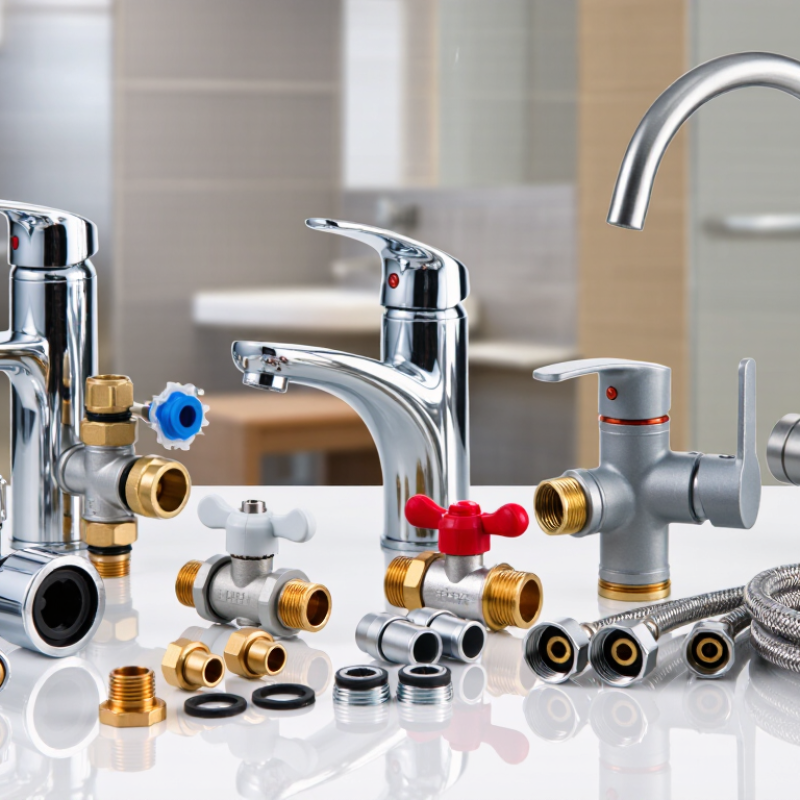
Plumbing accessories include taps, showerheads, angle valves, flexible connectors, traps, drains, and pipe fittings. Each serves a different job. A shut-off valve isolates a basin during repairs, while a P-trap holds water to block drain odors. Small parts matter. Buyers should check thread size, connection type, pressure rating, and material compatibility before ordering. A fitting that looks standard may not match local pipe dimensions. That mismatch can delay installation.

The WHO/UNICEF Joint Monitoring Programme reported that 2.2 billion people lacked safely managed drinking water services in 2022. This figure describes access, not accessory demand, but it highlights why dependable water systems matter.

For global markets, corrosion resistance and repairability deserve close attention. Water chemistry varies, and so do maintenance skills and replacement-part availability. Stainless steel, brass, and engineered polymers each have trade-offs; no material suits every setting. A catalog can appear complete, yet one overlooked seal size can stop a job. I would verify samples against the actual installation conditions, not rely on a product photo. One detail still gets missed: packaging and clear installation instructions affect field use, too.

How to Evaluate Quality, Compatibility, and Performance

For global buyers, quality begins with evidence, not polished packaging. The U.S. EPA WaterSense Bathroom Faucet Specification sets a maximum flow of 1.5 gallons per minute, about 30 percent below the 2.2-gpm federal baseline. Its Showerhead Specification limits flow to 2.0 gpm, versus the 2.5-gpm federal standard, while also testing spray performance. These figures offer useful benchmarks, but a low flow rate alone does not prove a product will perform well in every installation.

Flow figures are not the whole story.

Check connection threads, inlet sizes, and installation clearances against the project drawings. NPT and BSP threads are not interchangeable, even when they look close. A small mismatch can cause leaks or force installers to add adapters.

Fit matters.

Confirm operating pressure and temperature ranges, then review material documentation for drinking-water contact. NSF/ANSI/CAN 61 addresses health effects of materials in contact with drinking water; NSF/ANSI/CAN 372 addresses lead content. Ask suppliers for current test records, not just a printed claim. Inspect finish edges, seals, and moving parts on a sample, then test it under realistic pressure. I would not assume one successful sample guarantees consistent production.

It is easy to overlook that gap.

Regional Standards, Materials, and Sustainability Considerations

For global buyers, plumbing accessories must fit local installation practices, not just look compatible in a catalog. Check thread types, connection sizes, operating pressure, and temperature limits against regional requirements. A tap connector that fits one market may not seal correctly in another. Ask suppliers for current test reports and material declarations, then confirm that documents match the exact product and finish.

Materials matter at the point of use. Stainless steel can suit humid rooms, while brass components need clear information about alloy composition and drinking-water contact suitability. Finishes should withstand local water conditions and routine cleaning. Sustainability is not only recycled content; durable cartridges, replaceable seals, and accessible spare parts can keep a small leak from becoming a full replacement. I have seen buyers focus on packaging and overlook repairability. That balance deserves a second look.

Tips: Request dimensional drawings, pressure ratings, and applicable regional certifications before ordering. Test a sample with the intended fittings. Keep records of approved materials and spare-part availability, especially for projects across multiple markets. Small details count. Also ask how products should be maintained; aggressive cleaners can shorten finish life, even on well-made accessories.

2026 Plumbing Accessories: Faucet Flow-Rate Benchmarks

U.S. benchmark values for bathroom faucets, in gallons per minute (gpm).

The federal maximum is 2.2 gpm at 60 psi; the WaterSense specification sets a 1.5 gpm maximum, and California’s limit is 1.2 gpm. These figures are U.S. benchmarks, not global requirements. Buyers should confirm applicable local standards, pressure conditions, and product certifications before sourcing.

How Global Buyers Can Compare and Source Plumbing Accessories

2026 Best Plumbing Accessories for Global Buyers

How Global Buyers Can Compare and Source Plumbing Accessories

Global sourcing starts with the installation, not the catalogue photo. Record connection sizes, operating pressure, dimensions, finish, and replacement-part availability. Ask suppliers for material specifications, test reports, sample lead times, and packaging details. A polished sample can hide a weak seal. Check joints and threads in person where possible. Small details matter.

Performance claims need evidence. The US Environmental Protection Agency’s WaterSense program says certified bathroom faucets use at least 20% less water than standard models while meeting performance requirements. Treat this as a useful benchmark, not a universal rule; confirm local specifications before ordering. WHO and UNICEF’s 2023 Joint Monitoring Programme report estimated that 2.2 billion people lacked safely managed drinking water in 2022. That context makes durability and water efficiency practical buying concerns, not just catalogue features. Compare landed cost, warranty terms, and spare-part access—not unit price alone.

Tips: Request a sample and a current test report. Confirm carton dimensions, minimum order quantity, and delivery schedule in writing. A spreadsheet helps, but it cannot reveal every quality issue; allow time for inspection.

2026 Best Plumbing Accessories for Global Buyers - How Global Buyers Can Compare and Source Plumbing Accessories

A practical comparison of common plumbing accessory categories, typical material options, buying checks, and sourcing considerations. Specifications and regulatory requirements vary by product and destination market.

Accessory Category Common Materials Typical Application Key Comparison Points Quality Checks to Request Global Sourcing Considerations
Faucets and mixers Brass, stainless steel, zinc alloy, and engineering plastics in selected components Kitchen, bathroom, utility, and washroom water outlets Body material, cartridge type, handle operation, finish, connection size, and flow performance Material and finish inspection; cartridge operation; leak testing; connection and thread verification Confirm local connection standards, water-pressure range, required water-efficiency rules, and potable-water contact requirements.
Shower heads and hand showers ABS or other polymers, stainless steel, and brass for selected parts Shower outlets, hand showers, and shower-system upgrades Spray pattern, inlet connection, hose compatibility, finish durability, and flow rate Check spray consistency, connection fit, surface finish, and performance at stated operating pressures Review destination-market flow limits and verify that included hoses, brackets, and fittings match the intended system.
Angle valves and shut-off valves Brass, stainless steel, and polymer components depending on design Local isolation of water supply to fixtures and appliances Valve type, port size, operating mechanism, pressure rating, and seal material Open-and-close operation; pressure and leakage testing; thread and dimension checks Specify inlet and outlet thread standards clearly; do not assume that visually similar threads are interchangeable.
Flexible supply connectors Stainless-steel braid or polymer outer layers, with elastomeric inner tubing and metal end fittings Connecting faucets, cisterns, and other fixtures to supply lines Length, inner-tube material, fitting type, bend radius, pressure rating, and temperature suitability Inspect braid and crimps; verify end fittings; request pressure, leakage, and applicable durability test reports Match fitting geometry and thread type to the installation market; check potable-water approvals where required.
Floor drains and grates Stainless steel, cast iron, brass, and polymer options Bathrooms, balconies, kitchens, and utility areas Drain outlet size, grate dimensions, trap arrangement, cleanability, and corrosion resistance Check dimensions, drainage flow, grate fit, surface condition, and water-seal performance for trapped designs Confirm floor build-up, outlet direction, local drainage connection, and whether a trap or odor-control feature is needed.
Traps and waste fittings Polypropylene, ABS, PVC, brass, and stainless steel depending on use and design Connecting basins, sinks, and other fixtures to drainage systems Pipe diameter, adjustable range, trap configuration, access for cleaning, and seal design Check joint fit, sealing, dimensional consistency, and leakage after assembly Confirm compatibility with local drainage pipe sizes and fixture outlets; verify material suitability for the intended waste stream.
Shower hoses and wall brackets Stainless steel or polymer hoses; brass, stainless steel, or polymer brackets Hand-shower connections and shower-head support Hose length, fitting compatibility, flexibility, kink resistance, and bracket adjustability Inspect hose ends and seals; test water leakage and movement; check bracket stability and finish Specify connection standards and included washers; confirm compatibility with the selected hand shower and mixer.
Toilet flush components Engineering plastics, elastomers, and stainless-steel or brass parts in selected assemblies Cisterns and toilet flushing systems Inlet type, flush mechanism, adjustable settings, seal materials, and compatibility with cistern design Check fill and flush operation, seal integrity, adjustment range, and repeated-cycle performance Match the mechanism to cistern dimensions, water inlet position, and applicable water-efficiency requirements.
Mounting hardware and escutcheons Stainless steel, brass, plated metals, and engineering plastics Securing or covering plumbing connections and fixture penetrations Dimensions, corrosion resistance, finish match, fixing method, and substrate compatibility Inspect dimensions, coating consistency, fastener fit, and resistance to corrosion under the intended conditions Confirm finish samples and packaging protection; specify whether fasteners are included and suitable for the installation surface.

Buyer note: Before placing an order, request current technical drawings, material declarations, test reports, installation instructions, and samples where appropriate. Verify that any certifications or approvals apply to the exact product, configuration, and destination market.