


Top Stainless Wire Grates Manufacturers in China
Choosing a supplier for Stainless Wire Grates takes more than comparing prices. The right manufacturer should understand the grate’s intended use, load requirements, opening size, and cleaning conditions. A tray used in food processing may need different mesh and finishing choices than a protective screen or industrial platform. Small details matter. Wire diameter, edge treatment, weld consistency, and dimensional tolerance can all affect fit and service life.
This guide introduces Chinese manufacturers and the factors buyers can use to assess them. It considers product range, customization, material documentation, production controls, and communication during sampling and order confirmation. Specifications should identify the stainless steel grade and finish, but buyers should also ask how these are verified. Requesting drawings, sample measurements, and inspection records can help clarify expectations before production. A polished website alone proves little. Even a detailed catalog may not answer every question.
Supplier capabilities vary, and a manufacturer suited to one project may not fit another. Compare claims against your application, and confirm lead times, packaging, and quality checks directly. If a detail remains unclear, ask again; that is not wasted time. This overview is a starting point, not a substitute for reviewing technical requirements or evaluating samples. The aim is a practical shortlist, with enough context to support a more informed decision.
Stainless Wire Grates: Product Types, Uses, and Chinese Supply Scope
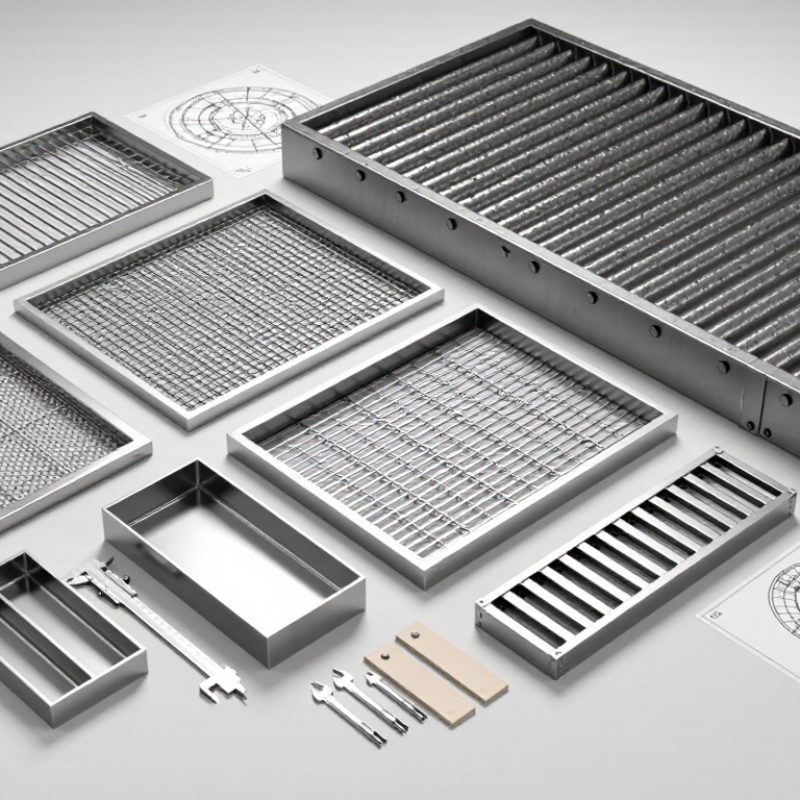
Stainless wire grates come in several forms. Welded panels use intersecting wires joined at each crossing, creating a firm surface for shelving, machine enclosures, and drainage covers. Woven mesh offers smaller openings and suits filtration, ventilation, or lightweight trays. Fabricated grates may include bent edges, support frames, or cut-outs for specific equipment. Useful details include wire diameter, opening size, panel dimensions, and edge finish. These affect stiffness, cleaning, and fit. A grate that looks substantial may still flex if its supports are too far apart.
Chinese suppliers commonly provide standard sheets as well as made-to-order panels, baskets, and framed assemblies. Stainless grades such as 304 or 316 may be available, but suitability depends on moisture, cleaning chemicals, and operating conditions. Ask for material identification, dimensional tolerances, weld inspection details, and a sample made to the intended specification. Easy to miss. Finishing options can include pickling, passivation, or electropolishing, depending on the producer’s equipment. Capabilities vary between mills and fabricators, so confirm who performs each process. A neat sample is reassuring, but it does not prove consistent production; check the inspection plan and packing method before placing a repeat order.
Top Stainless Wire Grates Manufacturers in China - Stainless Wire Grates: Product Types, Uses, and Chinese Supply Scope
| Product type | Typical construction | Common materials | Typical uses | Common China supply options | Key checks before ordering |
|---|---|---|---|---|---|
| Welded wire grate panels | Intersecting wires joined at their crossings, usually by resistance welding, to form a rigid mesh panel. | Commonly stainless steel grades 304 or 316; other grades may be available by specification. | Guards, racks, partitions, drainage covers, equipment enclosures, and general-purpose panels. | Made-to-order wire diameter, aperture, panel dimensions, edge treatment, and cut-to-size fabrication. | Specify wire diameter, opening size, panel tolerance, weld quality, edge finish, and material documentation. |
| Woven wire mesh panels | Wires interlaced in plain or other specified weaves; openings and wire sizes determine screening characteristics. | Typically 304 or 316 stainless steel, selected according to corrosion exposure and service conditions. | Screening, filtration, sieving, ventilation, and protective covers where a defined mesh opening is required. | Rolls or cut panels; mesh count, wire diameter, weave, and dimensions can generally be specified. | Confirm mesh count and opening dimensions, wire diameter, weave, usable area, and edge reinforcement. |
| Perforated stainless panels | Sheet metal punched with repeated holes; this is a perforated panel rather than an interwoven or welded wire product. | Commonly stainless steel sheet in grades such as 304 or 316. | Machine guards, ventilation panels, strainers, screens, and architectural or equipment panels. | Custom hole shape, hole size, pitch, sheet thickness, panel size, and perimeter finishing. | Check hole pattern, open-area percentage, sheet thickness, flatness, and edge condition. |
| Bar grating (distinct from wire mesh grates) | Load-bearing bearing bars joined by crossbars; it is a structural grating product, not a fine wire-mesh panel. | Stainless steel grades are selected to suit the environment and engineering requirements. | Platforms, walkways, stair treads, and drainage areas when designed for the required loads. | Custom panel dimensions, bearing-bar spacing, crossbar spacing, and banding or cut-outs may be specified. | Request load data, span and support details, bar dimensions, slip-resistance details, and applicable design criteria. |
| Fabricated grate assemblies | Wire or mesh panels combined with frames, supports, hinges, handles, or mounting features. | Material grade and component selection depend on the specified service environment. | Custom equipment covers, removable access panels, baskets, guards, and process-area components. | Drawing-based fabrication, cut-outs, formed edges, frame integration, and specified surface finishing. | Provide drawings, dimensions, tolerances, assembly method, finish, inspection requirements, and quantity. |
| Material and finish options | Options vary by product and fabricator; finishes may include mill finish, pickled, brushed, or electropolished surfaces. | Grade 304 is widely used for general environments; grade 316 offers improved resistance to chlorides and many corrosive environments. | Choice depends on exposure, cleaning regime, temperature, contact conditions, and design life. | China-based suppliers commonly quote specified grades, dimensions, finishes, and fabrication requirements for export orders. | Confirm the exact standard and grade, request material test documentation where needed, and assess suitability for the application. |
Note: Product availability, tolerances, certifications, and export documentation vary by supplier and order. Confirm technical requirements and applicable standards before purchase.