


What Are the Top Bathroom Products to Buy in 2026?
Choosing the top bathroom products for 2026 means balancing comfort, water use, durability, and the space available at home. A sculptural faucet may look striking, but it needs to work with the sink and existing plumbing. Small details matter. So does the budget.
Spending data helps set realistic expectations. Houzz’s 2024 U.S. Bathroom Trends Study reported median spending of $25,000 for larger primary-bathroom remodels and $15,000 for smaller ones. These figures describe remodel budgets, not the price of individual products. Still, they show why shoppers should compare installation needs alongside product features. A new shower system can involve more than choosing a showerhead.
Water efficiency deserves a close look. The U.S. Environmental Protection Agency’s WaterSense specification sets a maximum flow rate of 2.0 gallons per minute for labeled showerheads, compared with the federal standard of 2.5 gallons per minute. That gives buyers a practical benchmark. It does not guarantee that every model will feel comfortable in every home.
This guide examines bathroom products likely to earn consideration in 2026, including faucets, toilets, showers, vanities, and storage. It weighs useful features against maintenance, fit, and verified specifications. Trends can help narrow the choices. They cannot predict how a finish will age or whether a product suits your daily routine. That part takes careful comparison.
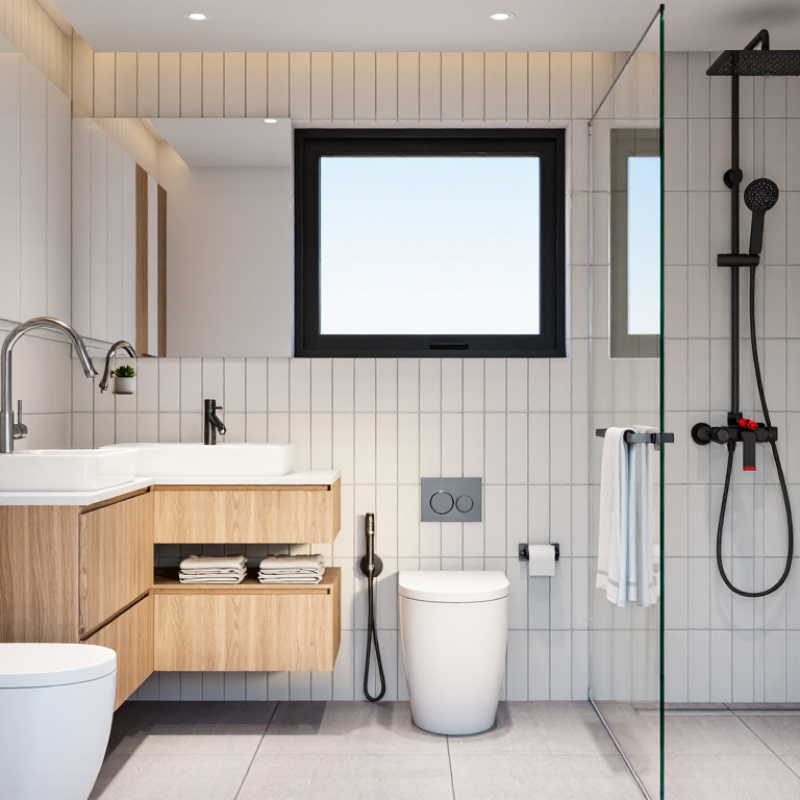
How to Define the Best Bathroom Products for 2026
Defining the best bathroom products for 2026 means judging how well they work in your actual space. Start with daily needs: a shower control that is easy to adjust, a fan that clears steam, and drawers that fit full-size bottles. Then check dimensions, cleaning instructions, replacement-part availability, and installation requirements. A polished finish cannot fix a cramped layout. I would also treat touch controls cautiously; wet fingers and unfamiliar guests can expose small design flaws.
Water use offers a useful measure. The U.S. Environmental Protection Agency’s WaterSense specifications set a maximum flow of 1.5 gallons per minute for labeled bathroom faucets. That is at least 30 percent less than the 2.2-gallon federal baseline. WaterSense-labeled toilets use 1.28 gallons per flush or less, at least 20 percent below the 1.6-gallon baseline. These figures help compare products, but household pressure and installation still affect performance. Small details matter.
Tips: Measure the vanity, door swing, and plumbing locations before ordering. Keep a photo of the existing connections. Read care instructions before choosing a finish, especially if hard-water spots are common in your home. A product that is easy to maintain may serve you better than one with extra features.
| Product Category | What to Look For | Useful Benchmark or Feature | Best For | Buying and Installation Check |
|---|---|---|---|---|
| High-efficiency toilet | A WaterSense-labeled model with independently tested flushing performance, an appropriate bowl height, and a flush mechanism that is easy to maintain. | In the United States, WaterSense-labeled toilets use no more than 1.28 gallons per flush and meet the program’s performance requirements. | Reducing water use while replacing an older or poorly performing toilet. | Measure the rough-in distance, check the outlet and supply connections, and confirm that the bowl shape and height fit the room and users. |
| Water-efficient showerhead | A WaterSense-labeled showerhead with a spray pattern and flow that feel comfortable for the household. | U.S. WaterSense-labeled showerheads use no more than 2.0 gallons per minute. | Lowering shower water use without relying on a high-flow fixture. | Check the existing shower arm and connections. If water pressure is low, inspect the plumbing and showerhead compatibility before buying. |
| Bathroom faucet | A WaterSense-labeled bathroom faucet or faucet accessory, with a handle style that is easy to operate and a finish suited to the room. | U.S. WaterSense-labeled bathroom sink faucets have a maximum flow rate of 1.5 gallons per minute. | Replacing a worn faucet or reducing water use at a frequently used sink. | Count the sink’s mounting holes, measure the spacing, and check whether the drain assembly and supply lines are included. |
| Quiet exhaust fan | A fan with an airflow rating suitable for the room, a low sound rating, and a duct connection that can vent outdoors. | A common sizing guideline for bathrooms up to 100 square feet is at least 1 cubic foot per minute of airflow per square foot of floor area; a 50 CFM minimum is commonly recommended. | Removing moisture and odors to help limit condensation and mold growth. | Confirm the duct route, duct diameter, electrical requirements, and local ventilation rules. Vent the fan outdoors, not into an attic or wall cavity. |
| Pressure-balancing or thermostatic shower valve | A valve designed to help maintain a more consistent shower temperature when water pressure changes elsewhere in the home. | Choose a valve with temperature control and safety features appropriate to household needs; product features and local requirements vary. | Bathrooms used by children, older adults, or anyone who may be sensitive to sudden temperature changes. | Valve replacement can involve opening the wall and modifying plumbing. Use a qualified installer where required and follow the manufacturer’s temperature-setting instructions. |
| Securely mounted grab bar | A purpose-made grab bar with a comfortable grip, corrosion-resistant construction, and mounting hardware suited to the wall structure. | Mounting into structural backing is generally more dependable than fastening only to wallboard. Follow the product instructions and applicable accessibility guidance. | Improving stability near a shower, tub, or toilet. | Locate framing or install suitable structural blocking before tiling or wall finishing. Do not treat a towel bar as a grab bar. |
| Water-leak detector | A sensor with an audible alarm; connected models may also send phone alerts. Some systems can work with an automatic shutoff valve. | Check the alert method, power source, connectivity requirements, and whether the device continues to function during an internet outage. | Early notification of leaks near toilets, sinks, washing machines, or water heaters. | Place sensors where leaks are most likely to collect, and test the alarm regularly. A detector alone does not stop water flow. |
| Bathroom-rated LED lighting | An LED fixture with suitable damp- or wet-location ratings for its installation position and a comfortable color appearance for grooming. | Compare lumens for brightness, color temperature for appearance, and the fixture’s location rating for the intended area. | Improving visibility at the vanity, shower, or general room lighting while using an efficient light source. | Choose a fixture specifically rated for its location, especially near a shower or tub. Follow local electrical requirements and use a qualified electrician when needed. |
Related Posts
-
How to Choose the Best Bathroom Supplies for Your Needs?
-
Why Choosing the Right Bathroom Supplies Matters for Your Home?
-
2026 Top Trends in Tub and Tile Design for Modern Bathrooms?
-
2025 Top 5 Lavatory Faucets for Your Bathroom Makeover
-

Top Tips for More Plumbing Solutions in Your Home?
-

2026 Best Plumbing Brands to Consider for Your Home Improvement Projects?