Choosing among the Top 10 Conveyor Idler Roller Manufacturers Worldwide requires more than comparing catalog prices. A reliable idler must carry heavy loads, rotate smoothly, and survive dust, moisture, impact, and temperature changes. The best Conveyor Idler Roller Manufacturers show this performance through testing, field experience, and clear technical documentation.
R. Todd Swinderman, a recognized conveyor-safety specialist, has emphasized, “Good conveyor design begins with understanding the material, not merely moving it.” That principle matters here. A limestone conveyor behaves differently from a coal, grain, or port-handling system. Roller diameter, bearing protection, shell thickness, sealing quality, and belt speed all influence service life. Small design choices matter.
Details tell the real story.
This guide examines ten global manufacturers through practical criteria. These include manufacturing consistency, runout control, impact resistance, corrosion protection, maintenance support, and international availability. It also considers whether companies provide credible test data rather than attractive claims. Certifications can help, but they never replace operating evidence.
Some rankings remain debatable. Regional service quality may matter more than brand recognition. A premium roller can also fail when installation, alignment, or cleaning is neglected. That weakness deserves attention.
Readers will find a balanced comparison for mining, cement, quarrying, ports, logistics, and bulk-material applications. The goal is not to declare one universal winner. It is to identify manufacturers that offer dependable engineering, measurable quality, and practical support for demanding conveyor environments.
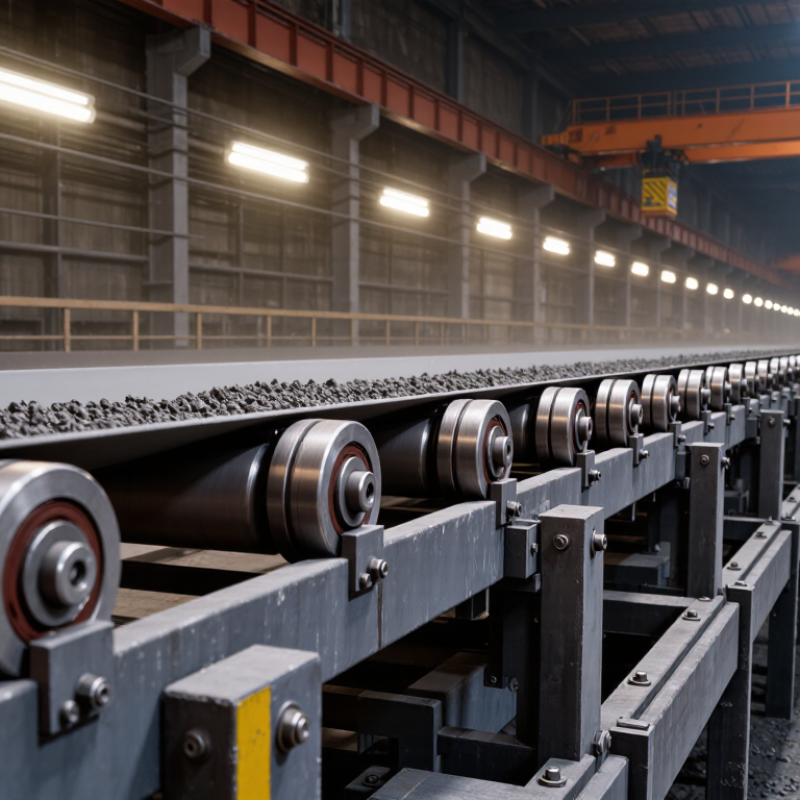
Top 10 Conveyor Idler Roller Manufacturers Worldwide
Conveyor idler rollers commonly range from 63.5 to 219 mm in diameter. The right size depends on belt width, speed, material, and operating conditions. A small roller may suit a light-duty line, while larger diameters can support heavier service and reduce rotational speed. Diameter alone, however, does not determine capacity.
CEMA load classes help compare idlers under defined operating conditions. Check the applicable rating alongside belt speed, idler spacing, shaft dimensions, and bearing details. Abrasive material, impact at loading points, and long daily run times can change the practical choice. A roller that meets a nominal rating may still wear quickly if the installation is poorly matched. That detail is easy to miss.
Tips: Measure the existing roller’s face length, diameter, and shaft ends before ordering. Confirm the duty class against actual material load and belt speed, not just the conveyor’s nameplate. Listen for bearing noise during routine inspections; a faint rough sound can be an early warning. Records are not always perfect, so verify dimensions on site.
A credible ranking must begin with measurable engineering evidence, not advertising claims. Each manufacturer is assessed against CEMA load guidance, ISO 5048 conveyor calculations, and DIN 22101 belt tension principles. These references help evaluate radial loads, belt speed, spacing, and expected service conditions.
Verified capacity data carries significant weight. Reviewers should examine load-test records, bearing ratings, shell thickness, shaft dimensions, runout measurements, and operating hours. Factory documentation matters, but field evidence matters more. A roller surviving dusty transfer points and continuous loading offers stronger proof than a polished laboratory sheet. Small details count.
The ranking also considers manufacturing consistency, sealing performance, balance, maintenance access, and documented quality controls. Capacity claims without test conditions receive limited credit. This is important because temperature, impact, alignment, and material density can change actual performance. Standards are useful, but they are not interchangeable.
Some data will remain incomplete.
That weakness should be visible. A responsible ranking records missing evidence instead of filling gaps with assumptions. Verified production volume, repeat-order history, and independent inspection reports can separate dependable suppliers from capable but unproven manufacturers. The final list should reward transparent engineering, repeatable capacity, and realistic service data rather than the loudest promises.
The top ten conveyor idler roller manufacturers worldwide differ most in footprint, certification depth, and product coverage. Many operate plants across Asia, Europe, and North America, supported by regional warehouses and field-service teams. A wider footprint can shorten replacement times, especially when a mine or port needs thousands of rollers. However, warehouse distance does not always prove technical strength. Local stock levels matter more than a polished map.
Reliable manufacturers commonly maintain ISO 9001 quality systems and may add ISO 14001 environmental or ISO 45001 safety certification. Some products carry CE-related conformity documentation for applicable markets. Buyers should check the certificate scope, issuing body, factory address, and expiry date. Certification can cover one site, not every production line. That distinction is easy to miss. Factory audits, bearing tests, shaft runout checks, and dynamic load trials provide stronger evidence of daily control.
Product lines usually include troughing, return, impact, training, spiral, and high-angle idlers. More specialized ranges may use HDPE shells, low-friction designs, labyrinth seals, or heavy-duty bearings for abrasive materials. A practical comparison should examine shell thickness, sealing performance, operating temperature, belt speed, and expected service life. Requesting sample inspection records helps reveal consistency between batches. Even experienced teams can overvalue catalogue breadth; a large range means little if critical rollers arrive late or replacement dimensions are unclear. Service support remains uneven across regions, and that weakness deserves direct questioning.
Typical nominal roller diameters used across global conveyor idler product lines
Roller diameters vary by conveyor design, belt width, load, and regional standards. The sizes shown are common nominal options in industrial conveyor applications; they are not a ranking or specification for individual manufacturers.
Comparing the top ten conveyor idler roller manufacturers requires more than catalog capacity. Trough angle changes belt support, load distribution, and spillage risk. CEMA’s Belt Conveyors for Bulk Materials, 7th Edition, provides load tables for 20°, 35°, and 45° configurations. A 35° trough often offers a practical balance between carrying volume and belt training. A 45° design can improve containment, but it demands tighter alignment and stronger structural control.
Runout deserves direct measurement. Many CEMA-aligned procurement specifications target radial runout near 0.38 mm, or 0.015 inch, for steel idler shells. Excessive runout creates vibration, noise, and uneven belt wear. I would require dial-indicator readings at several shell positions, not one convenient point. One reading is weak evidence. Temperature and shell surface condition can also distort results.
Seal testing should combine dust and water exposure. IEC 60529 defines IP5X and IP6X dust protection levels, while IP66 includes powerful water-jet resistance. However, an idler is not simply an electrical enclosure. Its rotating shaft, grease cavity, and pressure changes need separate evaluation. ASTM D1264 water-washout testing can support grease selection, but it cannot prove complete seal integrity. I would request test duration, contamination type, bearing torque, and post-test grease condition. Some published comparisons still omit these details. That omission deserves skepticism.
A conveyor idler that fits on paper may still perform poorly in the field. Start with belt width, then check the frame and clearance around transfer points. Wider belts often need longer rollers and suitable support spacing to limit sag. Measure the actual belt, not only the nominal width listed in older drawings.
Speed matters. Faster belts can increase vibration and bearing heat, especially when rollers are misaligned or contaminated. Record operating speed and inspect the material carried: fine dust, sharp rock, and wet fines create different demands. Load calculations should include peak loading, not just the daily average. A brief surge under a crusher can be more damaging than steady flow. Check the expected duty cycle, too. A line running around the clock needs different maintenance assumptions than one used for a few shifts.
Ask manufacturers for documented operating limits, bearing details, sealing design, and recommended inspection intervals. Compare lifecycle cost, including installation time, replacement frequency, energy use, and access for maintenance. A cheaper roller can become expensive if crews must stop production often to replace it. Keep measurements and failure records; they reveal whether wear comes from the roller, poor alignment, or operating conditions. One limitation: site data is not always clean. Decisions made from estimates should be reviewed after the first inspection cycle.
Manufacturer-neutral selection guide: the profiles below illustrate common conveyor operating conditions and screening considerations. They are not manufacturer rankings, product specifications, or guaranteed design limits.
| Profile | Typical Application | Belt Width | Belt Speed | Roller Diameter to Consider | Load and Impact Factors | Duty Cycle | Lifecycle Cost Priorities |
|---|---|---|---|---|---|---|---|
| 1 | Light-duty packaging or assembly line | 400–650 mm | 0.2–1.0 m/s | 50–89 mm | Usually modest belt and material loads; confirm the supported load using the conveyor layout and idler spacing. | Intermittent to single-shift service | Purchase price, easy replacement, and compatibility with the frame and bearings. |
| 2 | Warehouse bulk-material transfer | 500–800 mm | 0.5–2.0 m/s | 76–108 mm | Assess the material load, belt tension, loading-point impact, and expected spillage. | Single- or two-shift service | Energy use, bearing protection, availability of replacement rollers, and planned maintenance time. |
| 3 | Quarry or aggregate conveying | 650–1,200 mm | 1.0–3.5 m/s | 89–133 mm | Account for abrasive fines, uneven feed, impact at loading zones, and return-side contamination. | Regular daily operation | Seal performance, shell wear, downtime exposure, and inspection frequency. |
| 4 | Sand and gravel processing | 800–1,400 mm | 1.0–4.0 m/s | 108–152 mm | Evaluate wet or abrasive material, carryback, washing conditions, and peak loading rather than average load alone. | Extended daily operation | Resistance to contamination, maintenance access, roller replacement labor, and service life under site conditions. |
| 5 | Coal or mineral handling | 1,000–1,600 mm | 1.5–5.0 m/s | 127–159 mm | Check bulk density, lump size, loading impact, dust exposure, and applicable site safety requirements. | Long operating shifts | Sealing, reliability, fire and safety compliance where applicable, and the cost of unplanned stoppages. |
| 6 | Port or stockyard conveying | 1,200–1,800 mm | 2.0–5.5 m/s | 133–178 mm | Consider high throughput, outdoor exposure, wind-blown dust, moisture, and variable material feed. | High utilization, often multi-shift | Weather protection, access for maintenance, service logistics, and downtime cost per hour. |
| 7 | Long-distance overland conveyor | 1,200–2,000 mm | 2.0–6.0 m/s | 133–194 mm | Use a system-level load calculation that includes belt tension, idler spacing, material profile, and operating conditions. | Continuous or near-continuous | Rolling resistance, bearing life, monitoring strategy, access costs, and the consequences of remote failure. |
| 8 | High-capacity mine or plant transfer | 1,400–2,200 mm | 2.5–6.0 m/s | 152–194 mm | Allow for heavy material loading, large lumps, transfer-point impact, and demanding environmental conditions. | Continuous, heavy-duty service | Reliability, verified load capacity, seal and bearing specification, and total cost of downtime. |
| 9 | Heavy-duty primary crushing feed | 1,200–2,000 mm | 0.5–3.0 m/s | 133–194 mm | Prioritize impact conditions and surge loads at the loading zone; a standard carrying idler may not be suitable there. | Frequent operation with severe loading events | Impact-zone design, replaceability, structural compatibility, and avoided damage to belt and support structure. |
| 10 | Harsh outdoor or corrosive environment | 650–1,800 mm | 0.5–4.0 m/s | 89–178 mm | Specify the actual exposure: water, salt, chemicals, temperature range, and airborne contaminants. | Seasonal or continuous, depending on site | Corrosion protection, sealing suited to exposure, inspection interval, and replacement frequency. |
