


10 Shower Products Sourcing Tips for Global Buyers
Sourcing shower products across borders is not simply a matter of comparing prices. A polished catalog can hide weak valves, uneven chrome, or packaging that fails during a long sea journey. Global buyers must examine product performance, supplier capability, compliance documents, and after-sales support together. Small details matter. A leaking cartridge can damage a retailer’s reputation faster than a delayed shipment.
David Kohler, chairman and CEO of Kohler Co., has said, “The bathroom is no longer just a functional space; it is becoming a personal wellness space.” That shift influences modern sourcing decisions. Buyers now evaluate rainfall showerheads, handheld sets, thermostatic systems, finishes, water efficiency, and installation comfort. Yet wellness claims should not replace measurable evidence. Ask for material specifications, pressure-test results, sample approvals, inspection records, and clear warranty terms. Vague promises are not enough.
This guide presents ten practical shower products sourcing tips for global buyers. It considers supplier audits, factory communication, minimum order quantities, lead times, packaging design, spare parts, and regional preferences. A sample may perform beautifully in a showroom but fail under hard water or unstable pressure. That possibility deserves attention. No checklist is perfect. Even experienced buyers can overlook one fitting, one label, or one missing instruction sheet.
The goal is not the cheapest purchase. It is a dependable product, delivered consistently, with fewer surprises after arrival. Compare carefully. Test realistically. Document every decision.
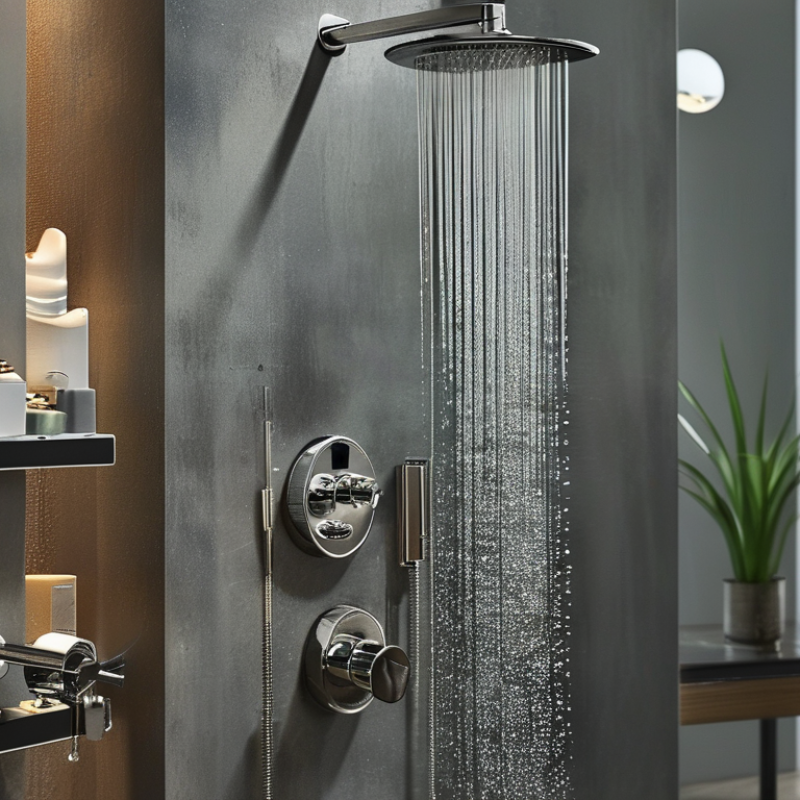
Understanding the Global Shower Products Market and Buyer Requirements
The global shower products market is broad, covering gels, fixtures, enclosures, hoses, and accessories. Grand View Research valued the global shower gel market at approximately USD 18.6 billion in 2023. Its forecast suggests steady growth through 2030. Definitions differ across reports, so buyers should compare product categories carefully. Forecasts are not promises.
A practical sourcing review should examine demand, target users, water conditions, materials, certifications, testing, factory experience, minimum order quantity, lead time, and after-sales support. These ten checks reduce avoidable purchasing risks. For fixtures, verify flow-rate performance and corrosion resistance. For gels, request ingredient documentation, stability results, safety files, and packaging compatibility. The World Health Organization highlights the importance of safe water and sanitation, making hygienic design a core buyer requirement. Small details matter, such as sealed pump heads and cartons that survive humid warehouses.
Price alone can mislead. The United Nations Comtrade database shows how widely trade values vary across bathroom-related product categories. Buyers should compare landed cost, not only the factory quotation. Ask for recent inspection records and independent laboratory reports. Check whether test samples match mass production. They sometimes do not. Sustainability also needs evidence; the OECD recommends measurable environmental claims rather than vague marketing language. A supplier’s recycled-content statement should include percentages, verification methods, and packaging specifications. Pilot orders can expose weak seals, inconsistent color, or missing instructions before larger commitments.
10 Shower Products Sourcing Tips for Global Buyers - Understanding the Global Shower Products Market and Buyer Requirements
| No. | Sourcing Dimension | Global Buyer Requirement | Practical Data or Benchmark | Verification Method | Key Buyer Risk |
|---|---|---|---|---|---|
| 1 | Target Market and Water-Flow Rules | Select the product according to the destination market’s water-efficiency rules, plumbing practices, and consumer expectations. | The United States generally limits standard showerheads to 2.5 gallons per minute, approximately 9.5 L/min, under federal requirements. Many export programs target approximately 6–9 L/min. | Request a flow-rate test report at the specified water pressure and confirm the applicable local regulation before placing an order. | A product may pass factory testing but fail local efficiency, labeling, or plumbing requirements. |
| 2 | Material and Corrosion Resistance | Use materials that can withstand hard water, humidity, cleaning chemicals, and repeated temperature changes. | Common product materials include stainless steel, brass, engineering plastics, silicone, and plated zinc alloys. Stainless steel and brass are frequently specified for water-contact components. | Check material certificates, conduct salt-spray or corrosion testing where relevant, and inspect plating thickness, adhesion, and surface consistency. | Low-grade substrates or poor plating can cause rust, peeling, discoloration, or water contamination concerns. |
| 3 | Connection Size and Compatibility | Confirm that inlets, outlets, hoses, adapters, and mounting points match the target market’s plumbing system. | G1/2 is widely used for shower hoses and hand-shower connections. Some markets also use NPT or other national thread systems. | Approve a dimensioned technical drawing, thread gauge result, and installation sample before mass production. | Thread incompatibility may lead to leakage, additional adapters, installation returns, and higher after-sales costs. |
| 4 | Pressure and Temperature Performance | The shower system should deliver stable performance across the pressure and temperature range expected in the destination market. | Test plans commonly include low, nominal, and high operating pressures, plus repeated hot-and-cold cycles. Exact limits should follow the applicable product standard. | Perform pressure, leakage, thermal-cycle, and functional tests using documented conditions and acceptance limits. | Poor performance at low pressure or after thermal cycling can cause weak spray, dripping, or premature component failure. |
| 5 | Product Standards and Compliance | Identify the mandatory safety, plumbing, water-efficiency, and chemical requirements before approving the design. | Relevant examples may include EN 1112 for shower outlets, EN 817 for mechanical mixing valves, and ASME A112.18.1/CSA B125.1 for plumbing supply fittings, depending on product type and market. | Obtain current certificates and test reports issued for the exact model, material configuration, and production location. | Using a certificate for a similar but different model can result in customs delays, listing removal, or product recalls. |
| 6 | Quality Control and Inspection | Establish measurable quality checkpoints for incoming materials, production, assembly, and final packing. | A practical inspection plan can cover appearance, dimensions, flow rate, leakage, function, packaging, and quantity. AQL sampling levels should be agreed contractually. | Use an approved inspection checklist, calibrated instruments, production samples, and a pre-shipment inspection report. | Unclear acceptance criteria make it difficult to reject defects or obtain corrective action. |
| 7 | Packaging and Transit Protection | Packaging should protect plated surfaces, fragile spray nozzles, glass components, and fittings throughout international transport. | The packaging specification should define inner protection, carton dimensions, gross weight, drop-test expectations, moisture protection, and shipping marks. | Conduct carton compression or drop testing when appropriate and inspect a packed production sample before shipment. | Insufficient protection can cause scratches, broken parts, missing accessories, and costly replacement claims. |
| 8 | Lead Time and Order Planning | Plan product development, tooling, production, inspection, and shipping as separate stages. | For standard products, production lead time is often several weeks. Customized tooling, finishes, packaging, or certifications can extend the schedule significantly. | Request a milestone-based schedule covering sample approval, material release, production completion, inspection, and dispatch. | A short quoted lead time may exclude tooling, testing, port handling, or certification work. |
| 9 | Total Landed Cost | Compare the complete delivered cost rather than only the factory unit price. | The landed-cost model should include product price, tooling, testing, packaging, inland transport, freight, insurance, duties, customs fees, and local delivery. | Prepare a cost sheet using the same Incoterm, shipment volume, currency, and destination for every quotation. | The lowest unit quotation may become more expensive after freight, compliance, defects, and warranty costs are included. |
| 10 | After-Sales Support and Spare Parts | Ensure that replacement parts, technical instructions, warranty terms, and installation support are available for the expected product life. | Critical spare parts may include cartridges, seals, washers, hoses, spray plates, filters, brackets, and fasteners, depending on product design. | Request a spare-parts list, exploded diagram, installation guide, warranty policy, and documented response process. | A product with no parts support can generate high return rates and reduce customer confidence even when the initial purchase price is low. |
Note: Regulatory limits, certification requirements, plumbing connections, and test conditions vary by product category and destination market. Buyers should confirm the latest local requirements before commercial production.
Related Posts
-

2026 Best Plumbing Accessories for Global Buyers?
-

Essential Plumbing Accessories Every Homeowner Should Know About
-

2026 Top Lavatory Faucet Trends You Need to Know?
-
What is a Basin Faucet and How Does It Work?
-

How to Choose the Perfect Bathroom Fixtures for Your Home?
-

10 Essential Tips for Choosing Shower Faucets That Enhance Your Bathroom Experience