


How to Source Decorative Plumbing Fixtures Globally?
Sourcing decorative plumbing fixtures globally is not simply a search for attractive taps, basins, and shower systems. It is a quality, compliance, logistics, and supplier-verification exercise. Market evidence supports this caution. Grand View Research’s bathroom fixtures market analysis identifies renovation, urbanization, and premium design as important growth drivers. However, estimates differ by product scope and regional definitions. That matters.
The U.S. Environmental Protection Agency’s WaterSense program states that labeled plumbing products use at least 20% less water than standard alternatives. Therefore, flow rate, certification, and test documentation are practical buying criteria, not decorative afterthoughts. The European Commission’s product-efficiency guidance also reinforces the value of transparent technical information. Local rules may govern materials, backflow protection, thread standards, and installation. A polished brushed-brass faucet still fails if its cartridge or spare parts are unavailable.
This guide examines global sourcing from a buyer’s workbench. Inspect finish samples under direct light. Verify lead and nickel declarations. Test packaging before shipment. Supplier claims require evidence. ISO 9001 certification can indicate a quality-management system, but it does not replace product testing or an on-site audit. That distinction is easy to miss. Freight cost, minimum order quantities, warranty response, and regional after-sales support should be evaluated together. Reports offer direction, not certainty. Their categories may not match your project. Real sourcing decisions need both data and doubt.
Define Project Requirements and Decorative Fixture Specifications
Global sourcing of decorative plumbing fixtures starts with clear project requirements. Define the room type, installation location, quantity, budget, and delivery schedule. Record water pressure, pipe connections, mounting method, and available space. A beautiful faucet may fail if its inlet size does not match local plumbing. Measure twice.
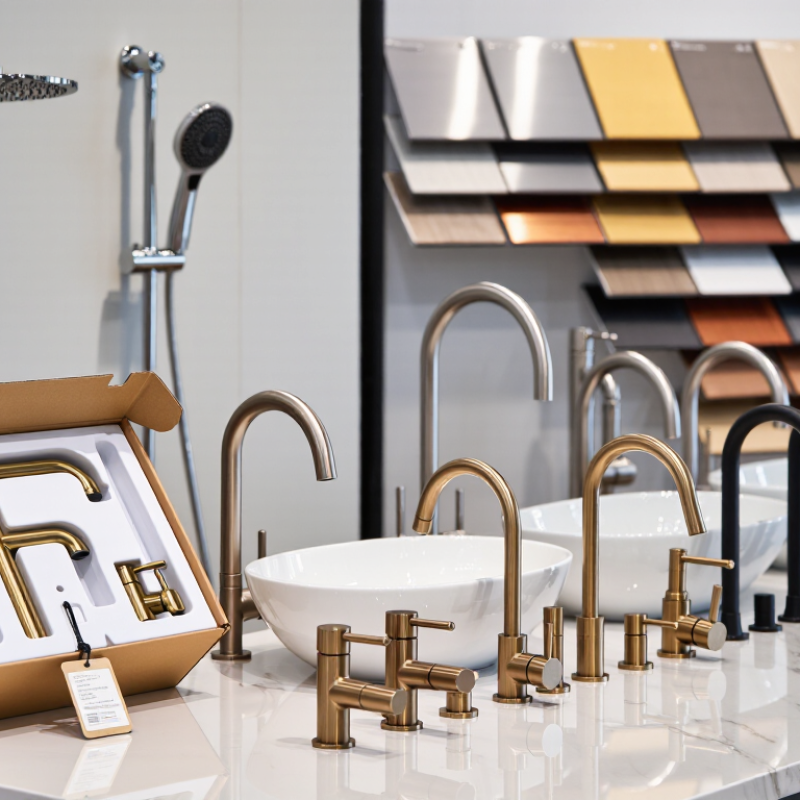
Decorative details need equal precision. Specify the required finish, color, handle style, spout reach, height, and surface texture. State whether the fixture serves a hotel, residence, restaurant, or public building. These uses may require different durability levels and maintenance plans. Confirm material composition, corrosion resistance, flow performance, and applicable safety certifications for each destination market. A detailed drawing with millimeter measurements prevents costly assumptions. However, some project teams still overlook cleaning access behind wall-mounted fixtures. That mistake deserves more attention.
Tips: Prepare one shared specification sheet for designers, engineers, buyers, and suppliers. Include reference photos, CAD files, acceptable color variation, packaging requirements, and inspection points. Request physical samples before approving production. Test the finish under strong bathroom lighting, not only in a showroom. Keep a written record of sample changes and approvals. Small differences can become expensive across hundreds of units. Be cautious with vague terms like “premium finish” or “standard connection.” Define them with measurable requirements. Supplier experience matters, but written evidence matters more.
How to Source Decorative Plumbing Fixtures Globally? - Define Project Requirements and Decorative Fixture Specifications
| Fixture Category | Typical Project Application | Core Material and Construction | Performance Requirement to Define | Applicable Standards or Verification | Connection and Installation Data | Finish and Appearance Specification | Global Sourcing Checkpoint |
|---|---|---|---|---|---|---|---|
| Decorative Lavatory Faucet | Guest bathrooms, residential suites, hospitality washrooms and premium commercial interiors. | Brass or stainless-steel body; ceramic cartridge; corrosion-resistant internal components; flexible supply hoses where permitted. | Define operating pressure range, temperature range, flow rate and spout projection. A common water-efficiency target is no more than 5.7 L/min at the specified test pressure. | Verify against ASME A112.18.1/CSA B125.1 or EN 817, depending on the destination market. Confirm potable-water contact requirements where applicable. | Specify deck-mounted or wall-mounted installation, number of mounting holes, supply connection size, reach, overall height and required rough-in dimensions. | Identify finish type, color tolerance, visible surface quality, scratch resistance and cleaning-agent compatibility. Request physical finish samples before approval. | Request dimensional drawing and flow-test report |
| Thermostatic Shower Valve | Residential bathrooms, hotels, wellness facilities and accessible shower rooms. | Brass valve body with thermostatic cartridge, temperature stop and serviceable filters or check valves. | Define maximum temperature setting, temperature stability, minimum operating pressure and response time. Include anti-scald requirements for the project jurisdiction. | Check ASSE 1016/ASME A112.1016/CSA B125.16 or the relevant EN 1111 requirements. Local plumbing and safety codes take precedence. | Specify concealed or exposed installation, inlet orientation, pipe size, finished-wall depth, access panel requirements and compatibility with the shower outlet system. | Coordinate trim plate diameter, handle style, surface finish, engraving and alignment with other bathroom fittings. | Confirm code approval and service access |
| Hand Shower and Shower Outlet | Standard showers, adjustable-height rails, bath-shower combinations and accessible bathrooms. | Metal or engineering-polymer body with flexible hose, spray face and removable flow regulator where required. | Define maximum flow rate, spray pattern, hose length, pressure range, limescale resistance and ease of cleaning. A frequent efficiency target is 9.5 L/min or less. | Verify applicable water-efficiency labeling, ASME A112.18.1/CSA B125.1 or relevant regional requirements, and backflow protection where required. | Specify hose connection, bracket type, rail length, mounting centers, swivel function and compatibility with the selected shower valve. | Match visible finish and color to the shower valve and other decorative fixtures. Define acceptable variation between production lots. | Confirm flow restrictor and connection compatibility |
| Freestanding or Wall-Mounted Tub Filler | Freestanding bathtubs, feature bathrooms and high-end residential or hospitality suites. | Machined brass or stainless-steel construction with ceramic cartridge, diverter and separate hand-shower connection when specified. | Define required filling rate, operating pressure, temperature control, spout reach and maximum outlet temperature. | Verify ASME A112.18.1/CSA B125.1, EN 200 or the applicable national standard. Confirm local requirements for thermostatic protection. | Specify floor-mounted or wall-mounted rough-in, finished-floor height, pipe centers, anchoring method, service access and tub overflow location. | Require a coordinated finish schedule covering polished, brushed, matte or plated surfaces, with sample approval and cleaning instructions. | Approve rough-in template before site installation |
| Decorative Basin | Countertop, undermount, wall-hung and semi-recessed lavatory installations. | Vitreous china, fine fireclay, ceramic or solid-surface material with non-porous glazed or sealed finish. | Define basin capacity, overflow provision, drain opening, waste compatibility, dimensional tolerance and resistance to staining or crazing. | For ceramic sanitaryware, verify ASME A112.19.2/CSA B45.1, EN 14688 or the destination-market equivalent. | Specify cutout template, mounting clips, countertop thickness, wall carrier requirements, drain position and tap-hole configuration. | Define color, gloss level, edge profile, glaze uniformity and acceptable visual tolerances under normal interior lighting. | Obtain installation template and dimensional inspection record |
| Close-Coupled or Wall-Hung Toilet | Residential bathrooms, hotels, offices and public washrooms with defined accessibility requirements. | Vitreous china bowl and tank, ceramic glaze, corrosion-resistant hinges and compatible flush components. | Define flush volume, trapway performance, bowl height, seat loading, water-surface area, noise target and cleaning performance. | Verify ASME A112.19.2/CSA B45.1, EN 997 or the applicable sanitaryware standard. WaterSense criteria may apply in the United States. | Specify outlet type, rough-in distance, cistern location, carrier frame, access opening, seat fixing centers and floor or wall support requirements. | Define white or custom color, glaze consistency, concealed fixings, seat material, hinge finish and alignment with the basin collection. | Confirm drainage geometry and local flush-volume limits |
| Concealed Cistern and Flush Plate | Wall-hung toilets, compact bathrooms and projects requiring a clean architectural wall surface. | Insulated polymer or coated metal cistern with replaceable valve, inlet assembly and dual-flush mechanism. | Define nominal flush volumes, refill time, operating force, leak resistance, sound level and serviceability through the flush plate opening. | Check EN 14055 or the relevant national cistern standard, plus local water-efficiency and accessibility requirements. | Specify frame height, wall thickness, discharge pipe size, water inlet position, finished-wall tolerance and carrier load rating. | Coordinate flush-plate material, color, actuator layout, anti-fingerprint requirement and replacement availability. | Confirm spare parts and maintenance access for the full project term |
| Linear Shower Drain | Barrier-free showers, large-format tile installations and wet-room applications. | Stainless-steel channel and grate with adjustable supports, waterproofing flange and removable hair trap where specified. | Define drainage capacity, grate loading, outlet position, water-seal depth, slope requirements and cleaning access. | Verify EN 1253 or the relevant drainage standard. Coordinate with the waterproofing system and local accessibility provisions. | Specify drain length, outlet diameter, outlet location, tile thickness, adjustable height range and required floor gradient. | Define grate pattern, brushed or polished surface, tile-insert option, edge profile and resistance to household cleaning chemicals. | Test waterproofing and drainage flow before tile installation |
| Bathroom Waste and Overflow Set | Basins, bidets, bathtubs and decorative vessel sinks requiring coordinated visible hardware. | Brass, stainless steel or corrosion-resistant polymer body with sealing washers and removable stopper mechanism. | Define discharge rate, overflow compatibility, seal integrity, stopper operation and resistance to repeated cleaning exposure. | Verify ASME A112.18.2/CSA B125.2, EN 274 or the applicable regional drainage standard. | Specify waste outlet diameter, thread type, overflow slot dimensions, tailpiece length, gasket arrangement and trap compatibility. | Match the visible flange, stopper and overflow trim to the faucet finish. Define tolerance for color and sheen variation. | Check compatibility with basin geometry and local trap sizes |
| Bidet Fitting or Health Faucet | Residential bathrooms, hospitality suites and accessible sanitary installations where permitted. | Brass or stainless-steel body with ceramic cartridge or trigger valve, flexible hose and wall bracket. | Define flow rate, shut-off behavior, hose pressure rating, temperature control and anti-siphon or backflow protection. | Verify the applicable faucet standard and local backflow-prevention requirements. Confirm whether a dedicated temperature-limiting device is required. | Specify mounting location, hose length, connection size, bracket orientation, isolation valves and clearance from the toilet or basin. | Coordinate handle, bracket and hose finish with the main decorative plumbing schedule. Define exposed fastener requirements. | Obtain local code review before final specification |
| Commercial Sensor Faucet | Public washrooms, airports, healthcare facilities, offices and high-traffic hospitality areas. | Brass or stainless-steel body with electronic sensor, solenoid valve, replaceable aerator and concealed battery or power supply. | Define activation range, shut-off delay, maximum flow rate, battery life or power requirements, vandal resistance and hygiene settings. | Verify applicable faucet standards, electrical safety requirements, electromagnetic compatibility and potable-water contact provisions. | Specify deck thickness, mounting-hole size, supply connection, control-box access, battery compartment and maintenance clearance. | Define finish durability, sensor-window integration, tamper-resistant components and consistency with the architectural hardware schedule. | Confirm electrical documentation, spare parts and maintenance procedure |
| Project-Wide Procurement Controls | Applies to every decorative plumbing fixture category included in an international project. | Use an approved material schedule with documented composition, coating system, seals, cartridges, valves and replaceable wear parts. | Set acceptance criteria for flow, pressure, leakage, dimensions, finish quality, packaging damage and sample-to-production consistency. | List destination-country standards, water-efficiency rules, accessibility codes, electrical requirements and third-party certification needs. | Freeze coordinated BIM or CAD dimensions, rough-in drawings, installation manuals, spare-part lists and site sequencing requirements. | Create a finish board with physical samples, approved color references, gloss level, cleaning method and inspection lighting conditions. | Use pre-shipment inspection, sample approval and destination-market document review |
Related Posts
-

2026 Best Decorative Plumbing Trends for Your Home Design?
-
10 Essential Tips for Choosing the Best Bathroom Fixtures
-
2025 Top Tips for Choosing the Best Tub and Tile Options for Your Bathroom
-
How to Choose the Best Bathroom Supplies for Your Home?
-

Top 10 Lavatory Faucet Styles You Must Consider for Your Bathroom Upgrade
-
What is the Best Shower Products for Every Bathroom Style?