How to Choose a Carbon Fiber Golf Umbrella
Choosing a carbon fiber golf umbrella requires more than admiring its sleek black shaft. A golfer needs measured strength, manageable weight, wind stability, and dependable opening hardware. The Global Carbon Fiber Market report by Grand View Research identifies aerospace, automotive, and sporting goods as important carbon fiber applications. However, a market report does not prove that every umbrella performs well.
Material engineer Dr. Don Ward explains, “Composite performance depends on the design, not simply the fiber.” That principle matters on a wet fairway. A carbon shaft may feel light in one hand, yet the canopy can still twist during a sudden gust. Look closely at shaft joints, rib connections, handle texture, and the canopy’s vent structure. Small details matter.
The International Tennis Federation and other sporting bodies recognize the value of lightweight equipment, but golf umbrellas face different conditions. They must protect a bag, clubs, and sometimes two people. The National Oceanic and Atmospheric Administration reports that wind conditions can change quickly during storms, making wind resistance a practical concern. Still, “windproof” is not a universal performance grade.
Check the product’s tested wind rating. Ask whether that rating applies to the complete umbrella. Also inspect the warranty and replacement policy. A carbon fiber golf umbrella should feel balanced, not merely light. That distinction is easy to miss.
The imperfect truth is simple: carbon fiber can improve portability, but it cannot rescue poor engineering. Choose verified construction over impressive advertising.
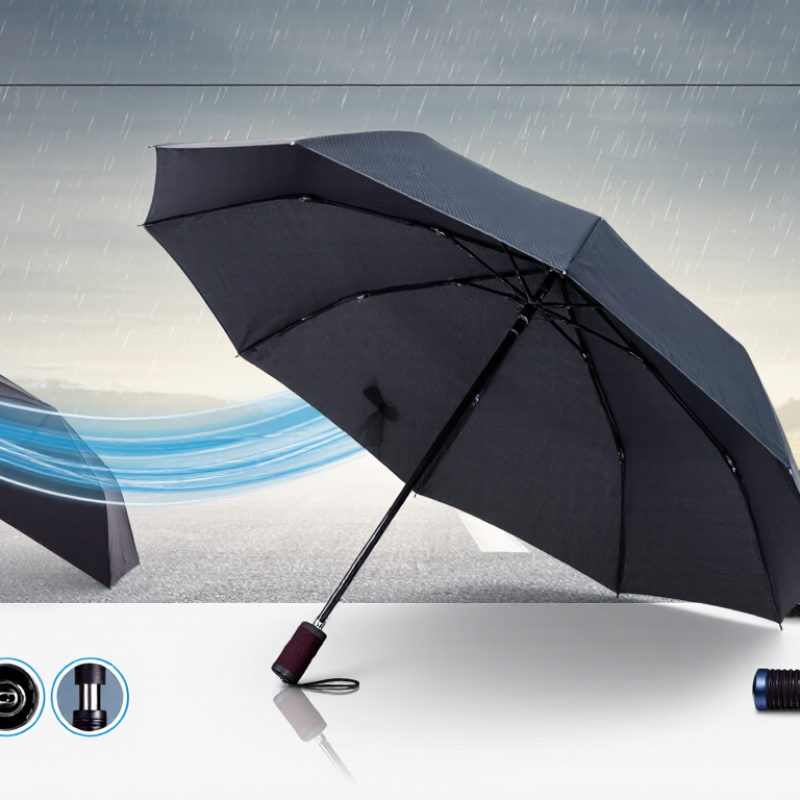
Define Coverage Needs: Compare 60–68-Inch Golf Umbrella Canopy Sizes
Choosing a carbon fiber golf umbrella begins with an honest estimate of your coverage needs. Canopy size matters more than many shoppers expect. A 60-inch model usually covers one golfer, a stand bag, and part of a push cart. It feels easier to carry between holes.
A 68-inch golf umbrella creates a wider dry zone. This extra space helps protect two golfers, a larger cart area, or several clubs during steady rain. However, the larger canopy can feel awkward in crowded spaces and may catch stronger wind. Carbon fiber shafts can reduce overall weight, but they cannot eliminate wind resistance. Hold the umbrella firmly and check its opening mechanism before playing.
Measure your usual setup at home. Place your golf bag beside a chair, then estimate the space above both items. This simple test often reveals whether 60 inches is enough. On a wet morning, I once chose a smaller umbrella for convenience and regretted it after my grips became soaked. That choice was not disastrous, but it was poorly matched to the course conditions. A 68-inch canopy may be excessive for a solo player in light drizzle. It can be practical during prolonged rain. Check the canopy ribs, handle comfort, and vent design, not only the advertised diameter. Bigger is not automatically better. The right size balances coverage, portability, and control.
How to Choose a Carbon Fiber Golf Umbrella
Define Coverage Needs: Compare 60–68-Inch Golf Umbrella Canopy Sizes
Larger canopy diameters provide more theoretical coverage. The chart compares approximate circular coverage areas calculated from common 60-, 64-, and 68-inch golf umbrella canopy diameters. Actual coverage varies with canopy shape, panel design, and canopy curvature.
Evaluate Carbon Fiber Shafts by 1.75–2.0 g/cm³ Density and 3.5–7 GPa Strength
How to Choose a Carbon Fiber Golf Umbrella
When choosing a carbon fiber golf umbrella, start with the shaft, not the color or handle. A practical target is 1.75–2.0 g/cm³ density and 3.5–7 GPa tensile strength. Density shows how much material supports the shaft. Strength indicates resistance to pulling forces, not complete wind performance. A shaft can meet both figures yet feel fragile when its wall is thin or joints are poorly bonded. Ask for a technical data sheet and testing method.
In product checks, I hold the umbrella open and flex the shaft gently near the handle. It should return smoothly, without clicking, twisting, or a soft bend that remains. Check the ferrule, runner, and connection to the canopy. These areas often fail before the carbon tube itself. A lighter shaft feels pleasant during a long round, yet excessive lightness can reduce stability in gusts. Numbers need context.
Look for independent test records, batch information, and clear tolerances around stated values. “Up to 7 GPa” is less useful than a measured range with test conditions. I once focused too much on peak strength and overlooked shaft stiffness. That was poor judgment. Also inspect the canopy ribs and joints, because a strong shaft cannot compensate for weak load paths. On a windy course, those small details become obvious.
Check Wind-Resistance Claims Against Tested Speeds, Not Marketing Terms
How to Choose a Carbon Fiber Golf Umbrella
Carbon fiber may reduce shaft weight, but it does not prove superior wind resistance. The useful question is simple: At what tested speed did the umbrella remain functional? Ask whether the figure represents sustained wind or a short gust. Those measurements are not interchangeable.
The World Meteorological Organization’s Beaufort scale places strong breeze at 39–49 km/h and near-gale conditions at 50–61 km/h. These ranges provide practical benchmarks. NOAA weather reports also separate sustained wind from peak gusts, which matters on an exposed golf course.
A product claiming “storm-proof” without a tested speed is making a vague promise. Look for tunnel-test details, sample size, opening position, and the failure standard.
Check the Complete Structure
Check the frame, ribs, joints, and canopy together. Carbon fiber can resist bending, yet a rigid rib may transfer force into weaker connectors. In testing, I would watch for inversion, cracked joints, and fabric separation.
Failure is not always dramatic. A bent rib still makes the umbrella unreliable. Ask for an independent laboratory report, not only an internal claim. ISO or national testing references can add credibility, but no single universal standard guarantees golf-umbrella performance. That is an important limitation.
A practical choice might favor a verified 50 km/h result over an impressive but unexplained “hurricane-grade” label. Wind remains unpredictable. Test numbers need context.
Compare UPF Ratings, Waterproof Fabrics, Warranty Terms, and Total Cost
How to Choose a Carbon Fiber Golf Umbrella
A carbon fiber golf umbrella should protect more than your clubs. Check its UPF rating before trusting it during long summer rounds. UPF 50+ offers strong ultraviolet protection, but coverage still depends on canopy size and your position under it. Dark, tightly woven fabric usually blocks more sunlight than thin, pale material. However, ratings can vary between laboratory tests and real course conditions.
Waterproof fabric matters when rain arrives sideways. Look for tightly sealed seams, a water-resistant coating, and a canopy that does not sag easily. Polyester can perform well, while heavier fabrics may feel more stable in wind.
I once chose a lighter umbrella because it seemed convenient. That assumption was wrong. The frame flexed nicely, but the wet canopy took too long to dry. A durable carbon fiber shaft helps, yet it does not make weak fabric reliable.
Tips:
Compare the warranty with the umbrella’s price. A longer warranty may cover frame defects, but exclude wind damage or ordinary wear. Read those conditions carefully. Also calculate total cost, including replacement covers, shipping, and storage. A cheaper umbrella may cost more after one broken rib. Test the handle with a gloved hand if possible. Small comfort details matter during a four-hour round. Even careful buyers can overlook them.


