How to Choose the Best Bedside Carpet in 2026?
Choosing the best Bedside Carpet in 2026 involves more than matching colors with your bedroom. It requires attention to comfort, safety, durability, and everyday cleaning. A soft rug can make cold morning floors feel warmer. However, excessive softness may trap dust near the bed. Material choice matters, especially for children, pets, or sensitive sleepers. Wool offers resilience, while cotton feels lighter and washes more easily. Synthetic fibers can resist stains, but quality varies widely.
I have learned that practical testing often reveals more than attractive product photos. Place a sample beside the bed and walk across it barefoot. Notice whether the pile feels stable, thick, or uneven. Measure the space carefully, including door movement and bedside-table legs. A low-pile design usually reduces tripping risks and simplifies vacuuming. Look for a firm backing, but avoid materials that slide on polished floors. A separate non-slip pad may improve stability.
Do not ignore maintenance. Check washing instructions, shedding reports, and drying requirements before purchasing. Some rugs look perfect initially but curl after cleaning. That mistake is easy to overlook. Reliable retailers should provide clear fiber details, dimensions, care guidance, and return policies. Independent reviews can help, although they may reflect different rooms and habits. This guide compares those practical details with current bedroom design preferences. The goal is not perfection. It is finding a Bedside Carpet that feels comfortable, remains secure, and performs honestly over time.
Define Bedside Carpet Needs Using ASTM F1637 Walking-Surface Guidance
How to Choose the Best Bedside Carpet in 2026?
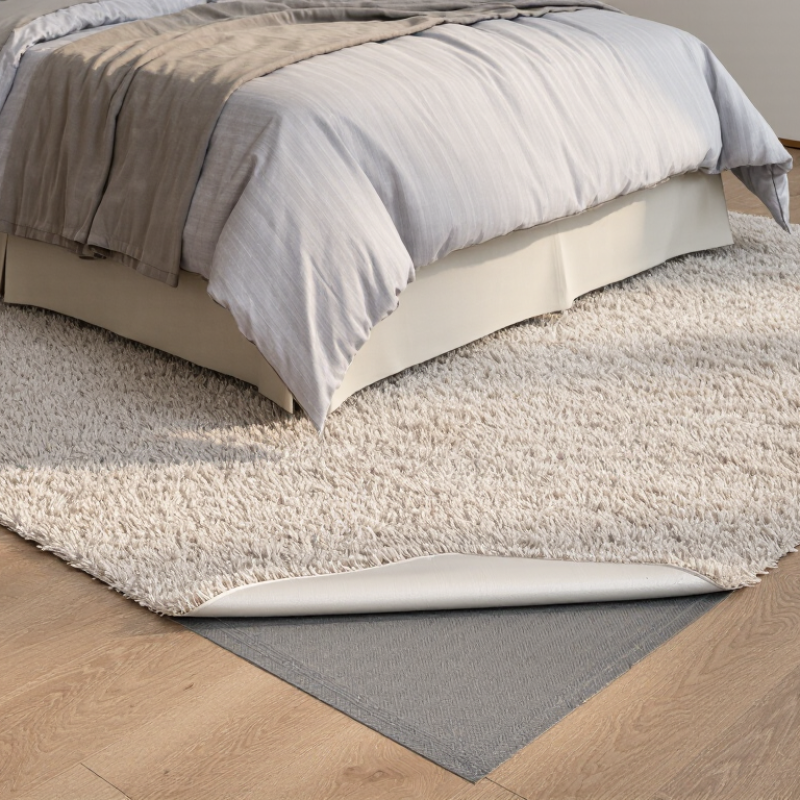
Define bedside carpet needs through ASTM F1637 walking-surface guidance, not appearance alone. The standard emphasizes clear paths, stable surfaces, controlled transitions, and reduced trip hazards. A bedside carpet should lie flat, resist shifting, and avoid raised edges near the bed. Choose a low, dense pile that does not catch toes or mobility-aid wheels. Keep it outside the main walking route when possible.
The CDC’s 2024 Older Adult Falls Data report states that more than 14 million older adults report falling each year in the United States. That figure changes how I assess a soft floor covering. A dark room, loose corner, and slippery sock can create a serious combination. Test the carpet at night. Walk over it slowly. Check every edge by hand. It should not slide when the bed frame moves slightly.
Look for a firm, compatible backing and enough coverage for the first step beside the bed. Avoid thick foam-like surfaces that compress unevenly. Clean beneath the carpet regularly, because dust can reduce traction and hide curling edges. I would also measure the clearance under the bed before buying. Decorative fit is easy; safe fit is harder. ASTM guidance does not select one carpet type for every room, and that limitation matters. A product that feels stable today may shift after repeated cleaning or furniture movement.
Sources: ASTM F1637, Standard Practice for Safe Walking Surfaces; CDC, Older Adult Falls Data, 2024.
Measure Bed Clearance with 18–24-Inch Overhang Design Recommendations
How to Choose the Best Bedside Carpet in 2026?
Measure bed clearance before choosing color, texture, or pile height. Measure from the floor to the lowest frame obstruction, not the mattress. Record the clearance on both sides. Uneven floors can alter the result. For a balanced layout, allow an 18–24-inch overhang beyond each exposed bed edge. This creates a soft landing for bare feet and keeps the carpet visually connected to the bed. A 2025 flooring installation report from the Carpet and Rug Institute emphasizes accurate room measurements and planned seam placement. Its guidance supports measuring twice before ordering. A practical reality: the first measurement is often wrong.
Check doors, drawers, vents, and under-bed storage. A thick carpet pad can reduce usable clearance by half an inch or more. That small difference matters with rolling boxes or low drawers. The U.S. Environmental Protection Agency recommends indoor humidity between 30% and 50%. Stable humidity helps reduce moisture-related carpet problems, especially in poorly ventilated bedrooms. Choose a dense, low-to-medium pile near the bedside. It feels comfortable without trapping excessive dust.
Tips: Mark the planned 18–24-inch overhang with painter’s tape. Walk around the bed at night. Test slippers, drawers, and doors. If storage barely clears, reduce pad thickness instead of forcing the carpet. Recheck after installation; furniture legs can compress the pile unevenly. I would also leave a small visual margin near walls, because a perfect measurement can still look crowded.
How to Choose the Best Bedside Carpet in 2026? - Measure Bed Clearance with 18–24-Inch Overhang Design Recommendations
| Bed Type | Standard Mattress Size
(W × L) | Minimum Rug Footprint
with 18 in Overhang | Recommended Rug Footprint
with 24 in Overhang | Practical Rug Size | Best Placement |
| Twin | 38 × 75 in | 74 × 111 in | 86 × 123 in | 6 × 9 ft | Place the rug perpendicular to the bed, extending beyond both sides and the foot. |
| Full / Double | 54 × 75 in | 90 × 111 in | 102 × 123 in | 8 × 10 ft | Center the rug beneath the lower two-thirds of the bed for balanced bedside coverage. |
| Queen | 60 × 80 in | 96 × 116 in | 108 × 128 in | 8 × 10 ft or 9 × 12 ft | Use 8 × 10 ft for a compact room or 9 × 12 ft when larger bedside and foot-of-bed coverage is desired. |
| King | 76 × 80 in | 112 × 116 in | 124 × 128 in | 9 × 12 ft | Choose a rug wide enough to extend at least 18 inches beyond each side of the mattress. |
| California King | 72 × 84 in | 108 × 120 in | 120 × 132 in | 9 × 12 ft | Align the longer rug dimension with the longer mattress dimension for consistent side coverage. |
Bedside Carpet Measurement and Clearance Checklist
| Measurement Factor | Recommended Value | How to Apply It |
| Side overhang | 18–24 in | Measure from each side of the mattress to the rug edge. Use 18 inches for limited floor space and 24 inches for a fuller appearance. |
| Foot overhang | 18–24 in | Confirm that the rug extends beyond the footboard or mattress without obstructing doors or walkways. |
| Clearance under the bed frame | Rug thickness should be at least 0.25–0.50 in less than measured clearance | Measure from the floor to the lowest part of the frame. Leave a safety margin so the rug can slide under the bed without binding. |
| Low-clearance bed | Low-pile carpet, approximately 0.25 in or less | Use a flat, tightly woven surface when the gap beneath the frame is small. |
| High-clearance bed | Low- to medium-pile carpet, approximately 0.25–0.75 in | Verify that the rug edge will not contact drawers, casters, storage compartments, or adjustable mechanisms. |
| Nightstand clearance | At least 2–4 in around each leg | Avoid placing a rug edge directly against the legs; allow enough space for stable footing and easy movement. |
| Walkway clearance | 30–36 in preferred | Keep a clear passage between the rug, walls, doors, and other furniture in the bedroom. |
Rug Style Selection by Bedroom Conditions
| Bedroom Condition | Suitable Carpet Profile | Reason |
| Small bedroom | 6 × 9 ft rug or two bedside runners | Provides landing space without consuming the entire walking area. |
| Large bedroom | 9 × 12 ft rug | Creates a unified zone beneath the bed and nightstands. |
| Doors near the bed | Low-pile rug with a secured edge | Reduces interference with door swing and helps prevent edge lifting. |
| Hard flooring | Non-slip backing or a compatible rug pad | Improves stability and reduces movement during walking. |
| Allergy-sensitive room | Low-pile, tightly woven, washable or easy-clean construction | Shorter fibers generally make routine vacuuming and spot cleaning easier. |
Calculation method: minimum rug footprint = mattress width or length + 36 inches; recommended rug footprint = mattress width or length + 48 inches. Actual room dimensions, furniture placement, bed-frame clearance, and door swing should be checked before purchase.
Compare Wool, Nylon, and PET Using CRI Durability and Warranty Data
Choosing a bedside carpet in 2026 starts with fiber behavior, not color alone. Wool feels warm under bare feet and recovers well from light compression. It can resist everyday wear, but moisture and careless cleaning may cause problems. Nylon usually offers stronger abrasion resistance, making it useful beside a frequently used bed. PET fiber often handles stains well and costs less, yet crushed areas may recover slowly.
Check the Carpet and Rug Institute’s published testing information before trusting a durability claim. CRI does not provide one universal durability score for every carpet. Look for construction details, pile density, fiber type, and test methods. A dense, low-pile carpet may perform better than a thicker carpet with weaker construction. That surprised me.
Warranty language matters just as much. Compare coverage periods, texture-retention terms, and exclusions for furniture marks, improper cleaning, fading, and moisture. A ten-year warranty may cover manufacturing defects, not visible wear near the bed. Ask for the full document. Keep the receipt.
For a quiet bedroom, wool suits buyers who value comfort and repairability. Nylon fits homes with heavier foot traffic or frequent rearranging. PET works for stain-prone rooms, especially with children or pets, but inspect its crush resistance carefully. Place a sample beside the bed for several days. Walk on it barefoot. Move a nightstand across it. Small tests reveal more than polished claims. Personally, I would not choose by warranty length alone; the exclusions often tell the real story.
Verify Fire and Slip Performance Under ASTM E648 and ASTM F1637
How to Choose the Best Bedside Carpet in 2026?
A bedside carpet should feel soft, but safety comes first. ASTM E648 measures the critical radiant flux of floor coverings during fire exposure. NFPA 101 commonly treats 0.45 W/cm² as Class I performance and 0.22 W/cm² as Class II performance. Ask for the complete laboratory report, not only a marketing claim. Check the tested construction, backing, thickness, and installation method. A different pad can change performance. That detail is often missed.
ASTM F1637 provides guidance for safe walking surfaces, including smooth transitions, secure placement, and reduced trip hazards. It does not replace a site-specific slip assessment. The World Health Organization reports that falls cause about 684,000 deaths worldwide each year, while many more incidents cause injuries requiring medical care. A loose corner beside a bed may look minor at noon. At night, it becomes a real hazard. My practical choice is a low-profile carpet with a stable backing and edges that remain flat after repeated cleaning. I would still recheck it after installation.
Tips: Request ASTM E648 results from an independent laboratory. Confirm the tested product matches the delivered carpet. Place the carpet fully beneath the bedside area, away from door swings. Test it barefoot and in socks. Keep it dry. Replace it when curling, lifting, or backing damage appears. I would not rely on appearance alone.


